

Oil prices experienced a significant decline after the announcement of a peace agreement between the United States and Iran. As news emerged that the Strait of Hormuz would soon reopen, prices immediately dropped during early Asian trading. President Donald Trump’s statement affirming that ‘oil will flow’ further contributed to the price decrease.
Brent crude, the global oil standard, saw a 3.8% decrease to $84.02 per barrel, while US-traded oil dropped by 4.1% to $81.40. Pakistan confirmed that the formal signing of the agreement would take place in Switzerland on Friday.
Although the specific terms of the deal have not been officially disclosed by either country, Iranian state media outlined a preliminary 14-point memorandum of understanding. This includes the removal of the US naval blockade within 30 days and the reopening of the Strait of Hormuz within the same timeframe under Iranian supervision.
Since the US and Israel initiated airstrikes on Iran in February, the strait had been effectively closed. The passage is crucial for transporting around 20% of the world’s oil and gas supplies.
In response to the agreement, Trump utilized Truth Social to communicate his success, emphasizing that ‘oil will flow’ globally once more. He expressed confidence in bringing peace and security to the region, highlighting his achievement where past world leaders had failed in making peace with Iran.
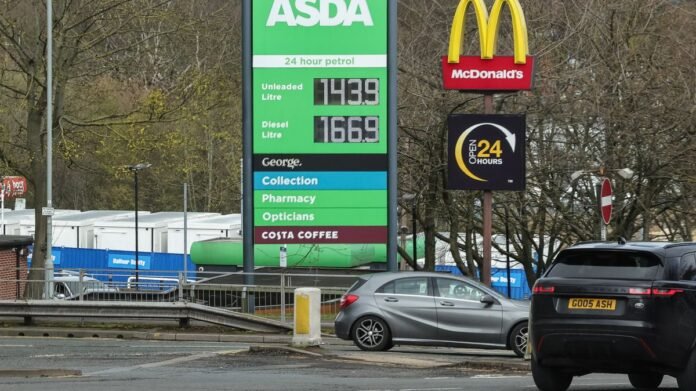
The US president confirmed to the New York Times that the agreement ensures the Strait of Hormuz will remain toll-free permanently. Despite the deal, petrol prices have continued to rise since February, reaching an average of 158.52p per liter in May according to the RAC.
Although optimistic about the agreement, JP Morgan had previously projected that global oil prices would likely remain in the “low $100s” for most of the year, even after the Strait of Hormuz reopens. The normalization of oil supplies in the region is anticipated to take some time.