
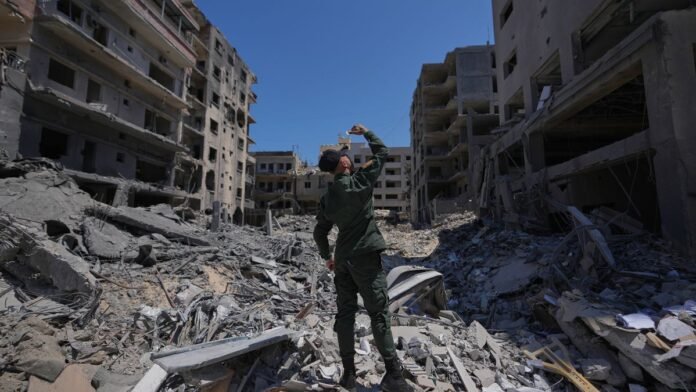

Israel has persisted in targeting Hezbollah sites in southern Lebanon despite a ceasefire pact between the US and Iran. In the face of the ‘memorandum of understanding’ on the Iran conflict, Lebanon has suffered casualties from the ongoing attacks. The controversial agreement, orchestrated by US President Donald Trump, acknowledges Lebanon’s involvement, effectively constraining Israel’s ability to strike Iran’s proxy arm, Hezbollah. This move has sparked outrage among many Israelis who view the memorandum as severely limiting their capacity to defend against Hezbollah by preemptively targeting the group within Lebanon.
Reports emerged shortly after the disclosure of the memorandum detailing Israeli delegates’ intensive efforts in Washington to persuade Trump’s aides to maintain troops in Lebanon. A western security source conveyed to the Mirror, “This development has escalated tensions between Israel and the US, as Israelis perceive it as a surrender. Israel has historically been able to thwart Hezbollah by striking within Lebanon, thereby hampering its potential threat. Operations against Hezbollah units, including the elite Radwan force, have been successful, but adherence to this agreement is seen as a setback that could allow Hezbollah to consolidate.”
Israel may find itself at odds with Washington, as it has long been dedicated to weakening Hezbollah, achieving significant victories in this regard. The necessity of having troops in southern Lebanon is deemed crucial by Israel to shield its northern communities. Hezbollah leader Naim Qassem praised the Trump memorandum as a triumph, while Israeli Prime Minister Benjamin Netanyahu faces the prospect of defying Washington. Qassem lauded the deal as a significant win for Iran, acknowledging Iran’s support in linking Lebanon to the agreement.
Qassem asserted that the memorandum compels Israel to halt its aggression in Lebanon and facilitates Hezbollah in expelling Israel from the region. He emphasized the inevitability of Israel’s departure from Lebanon, stating, “There are no safe zones for Israel; it must leave.” Tehran had insisted on Lebanon’s inclusion in any peace settlement to conclude the US-Israeli conflict with Iran, a proposition strongly resisted by Israel, which has been excluded from discussions on the memorandum’s contents.
The electronically signed memorandum by Trump in France initiates a 60-day consultation period on peace, aiming to reopen the Strait of Hormuz within 30 days. Despite hopes for the alleviation of tensions, Iran is expected to impose tariffs on passing vessels. The agreement, considered more onerous than former President Obama’s 2015 Joint Comprehensive Plan of Action, defers major issues related to Iran’s nuclear ambitions and overlooks curbing Iran’s missile arsenal, posing a significant threat to Israel.
The accord, beginning with an end to hostilities, includes 14 points, with Lebanon taking precedence. It mandates the cessation of fighting, including in Lebanon, and requires the US to refrain from interfering in Iran. Within 30 days, the US must lift its naval blockade and withdraw from the vicinity of Iran. Oil sanctions must be lifted, and Iran is to receive $300 billion from the US, with the source of this payment remaining unclear. A 60-day negotiation period on Iran’s nuclear program and further sanctions relief is stipulated, with Iran committing not to pursue nuclear weapon development.
The agreement prohibits new sanctions or bolstering US forces in the region, offering a $24 billion payment to Iran, half of which is to be disbursed before the 60-day deadline. Talks on uranium enrichment will only commence after frozen assets are partially released, oil sanctions are suspended, and the naval blockade is lifted. Notably, Iran’s missile program and support for proxy groups, including Hezbollah, are excluded from the agreement.