
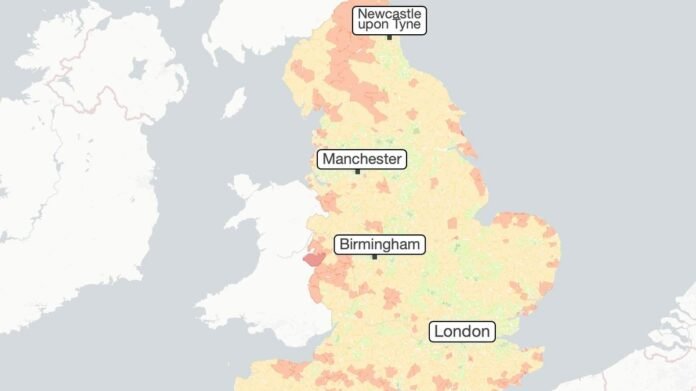

Britons residing in specific coastal regions show a higher incidence of cancer compared to other areas, as indicated by recent data pinpointing neighborhoods with elevated cancer rates.
Approximately 3.5 million individuals in the UK either have cancer or are in remission, with around 400,000 new cases reported annually. Health data from the House of Commons Library has identified certain regions in England and Wales with the highest concentration of cancer diagnoses since 2003.
Coastal and rural areas tend to have more cancer survivors, with New Forest in South East and East Devon in the South West standing out in the top 10 list for high cancer rates. The prevalence of cancer in these areas may be attributed to the larger population of older residents, as age represents the primary risk factor for cancer.
Six out of the top 10 neighborhoods with the highest cancer rates are situated in the New Forest, known historically for its high melanoma rates due to an older demographic and the outdoor lifestyle enjoyed by residents, exposing them to UV light.
In areas like New Milton West in New Forest and Sidmouth Sidford in East Devon, approximately one in 12 individuals are either battling cancer or in remission. These regions have an older demographic compared to the majority of English and Welsh neighborhoods, indicating a correlation between age and cancer prevalence.
Conversely, Leeds City Centre boasts the lowest proportion of cancer cases in the country, likely due to its younger average resident age and low percentage of elderly residents.
The data pertains to middle super output area neighborhoods, each comprising 2,000 to 6,000 households or approximately 5,000 to 15,000 people. It refers to patients registered with GP practices since 2003 who have received a cancer diagnosis, the standard criteria used by the NHS to track cancer prevalence.
The figures do not include individuals who passed away from cancer since 2003. Matt Sample, senior health policy manager at Cancer Research UK, emphasizes that cancer prevalence varies across the UK due to factors like age demographics. Efforts to combat cancer must be inclusive and prioritize early diagnosis, meeting wait time targets, and enhancing treatment protocols as outlined in the UK Government’s National Cancer Plan for England. Local health services must be supported to deliver tailored care that meets the specific needs of communities.