
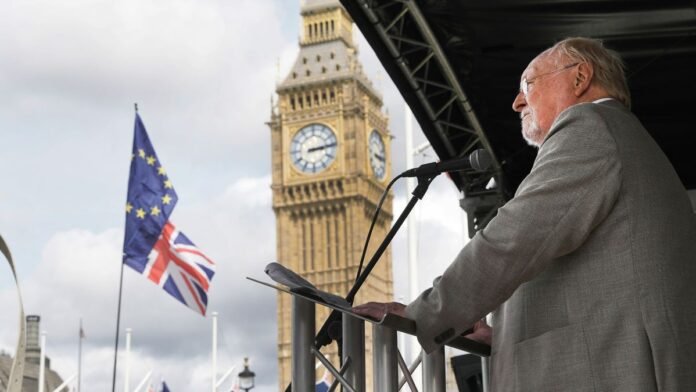

After a decade since the referendum and five years post-exit from the European Union and its Single Market, the aftermath of Brexit is deemed catastrophic. Independent assessments reveal significant economic setbacks, including a 6-8% decline in the national economy, resulting in a loss of £60 to £80 billion in essential service revenues. Investment has plummeted by 12-18%, goods trade has seen a 15% decrease, and employment alongside productivity has dropped by 3-4%.
The financial toll is staggering, averaging £3,000 per adult in the UK and £6,000 for an average household. The impact is felt firsthand by the British populace through financial constraints, job losses, missed opportunities, and travel limitations.
Politically, the repercussions are profound. Once influential in shaping the continent’s future, the UK now finds itself seeking engagement in security alliances as a mere applicant.
Amidst global upheavals like Trump’s trade policies, Putin’s hostile actions, China’s rapid growth, and the Middle East’s turmoil, Brexit continues to confine the UK. The public sentiment reflects a growing awareness of the detrimental effects, prompting a call for liberation from the current predicament.
The Labour Government’s efforts to realign with the EU and restore trust are widely supported as a step towards national interest. However, the focus remains on transforming these initiatives into substantial progress for a prosperous and secure future.
Respecting historical decisions is crucial, but as a democracy, being beholden to the past is not sustainable, especially for newer generations excluded from the initial vote a decade ago. The reality now underscores the necessity of collective strength in a world dominated by superpowers, emphasizing interdependence for economic and security stability.
Rejoining the European Union emerges as a viable solution, necessitating comprehensive membership without selective adherence to laws. The process will be challenging, requiring mutual benefits, time, and democratic validation through elections or referendums.
The imperative to reconnect with Europe stems from shared values, economic advantages, and a common destiny with the continent’s inhabitants. Overcoming obstacles to rejoin the Union is essential for the UK’s progress and prosperity in the evolving global landscape after a decade of setbacks and decline.