
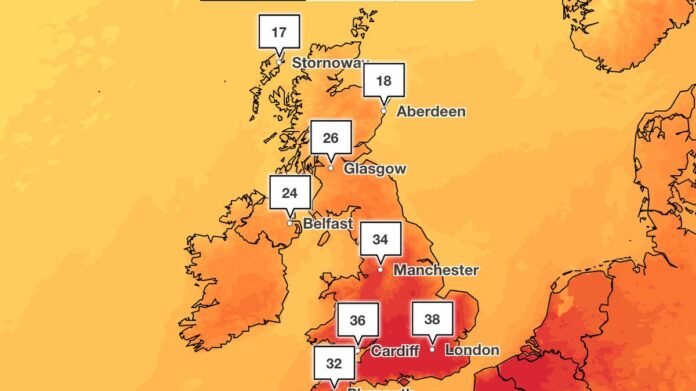

Experts are cautioning that the UK is on the brink of experiencing a humidity-fueled “heat dome” in the upcoming days due to an exceptional heatwave linked to climate change.
The forecast indicates daytime temperatures soaring to around 38C, with “tropical nights” expected to disrupt sleep as residences struggle to cool down. Scientists are warning that temperatures could surpass 43C later in the summer, leading to some homes becoming “uninhabitable heattraps.” Concerns are also raised about potential strain on emergency services, transportation, and energy systems.
Dr. Akshay Deoras, a research scientist at Reading University’s National Centre for Atmospheric Science, emphasized that this is not merely a heatwave but a relentless “heat-dome” phenomenon enveloping a large part of southern UK, pushing temperatures to unprecedented levels.
An amber alert for extreme heat has been extended by the Met Office until at least the end of Thursday, with temperatures expected to reach record highs in the UK this week. Prof Liz Bentley from the Royal Meteorological Society noted the likelihood of setting new temperature records for May and June.
Bill McGuire, a climate hazards expert at University College London, highlighted the growing trend of higher temperatures and prolonged heatwaves in the UK, stressing the potential risks to public health, infrastructure, and transportation systems.
The heatwave currently affecting mainland Europe is heading towards the UK, with western France expecting temperatures of up to 44C. The increased humidity accompanying this heatwave is a distinguishing factor from previous events.
Dr. Deoras explained that a “heat dome” phenomenon, characterized by prolonged high pressure over the UK and western Europe, is driving the extreme heat. He emphasized the role of human-induced climate change in intensifying such events and the challenges posed by persistent high temperatures and reduced nighttime cooling.
Northern regions of England and Wales are under an amber alert for extreme heat, with temperatures predicted to exceed 30C this week. Dr. Chloe Brimicombe from Oxford University highlighted the possibility of breaking temperature records for a second consecutive month.
Prof. Richard Allan from Reading University discussed the unprecedented nature of the current heatwave and the implications of rising greenhouse gas emissions on exacerbating extreme weather events. He emphasized the urgent need to reduce emissions across all sectors to mitigate further climate change consequences.