
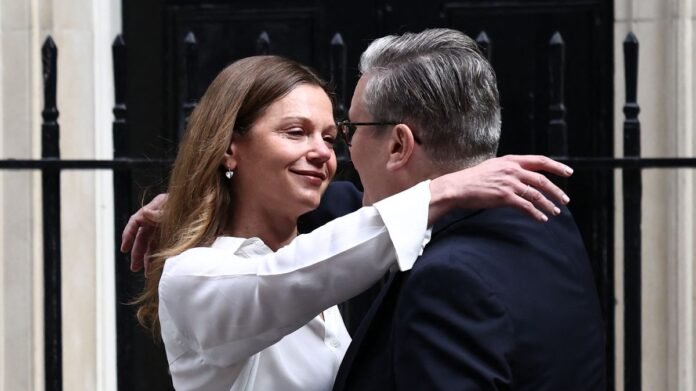

In an unexpected display of emotion, the Prime Minister’s voice cracked outside Downing Street, reminiscent of a rare moment when Margaret Thatcher showed tears in her ministerial car. Keir Starmer, the Prime Minister, struggled to maintain composure as he spoke of his wife, Victoria, and their “beautiful children.”
Acknowledging Victoria as his unwavering support system throughout his tenure, Starmer described her as his “rock” during both challenging and prosperous times. The scene outside Downing Street concluded with a heartfelt embrace between Starmer and Victoria before they retreated into their official residence.
Every Prime Minister faces a pivotal moment when political influence dwindles, realizing that once loyal allies have faded into obscurity. For Starmer, this moment arrived with the revelation that his support base was dwindling, with hundreds of MPs switching allegiance to another candidate.
Isolated and betrayed, Starmer found solace in the companionship of Victoria, his trusted confidante amidst turbulent times. Despite his notable achievements in office, including significant advancements in child poverty reduction and healthcare, Starmer’s political journey faced unexpected challenges that ultimately led to his resignation.
Starmer’s departure, marked by a dignified exit, left a lingering sense of disbelief among observers. Despite his integrity and accomplishments, Starmer’s inability to navigate turbulent political waters and overcome early setbacks ultimately defined his legacy.
Critics argue that Starmer’s leadership lacked the decisive vision needed to steer the country through tumultuous times, leaving the Labour Party vulnerable to right-wing influences. His departure, triggered by internal and external pressures, signifies a significant shift in British politics.
As Starmer bids farewell to his political career, guided by the wisdom of his steadfast partner Victoria, the legacy of his leadership remains a subject of debate and reflection.