
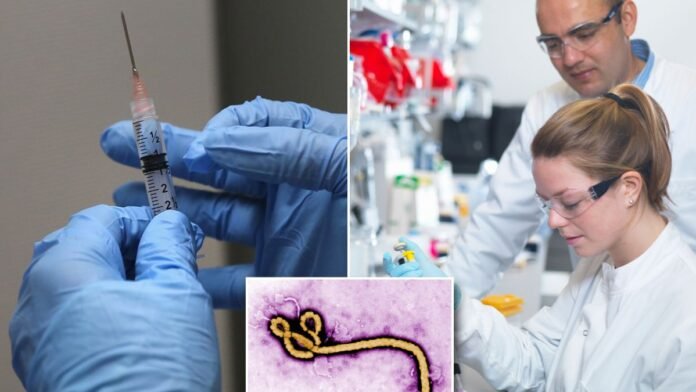

British scientists at Oxford University are commencing a trial for a pioneering Ebola vaccine aimed at combating a severe outbreak in Africa. The vaccine, named ChAdOx1 BDBV, was developed within eight weeks following a public health emergency in the Democratic Republic of the Congo, where Ebola has claimed 625 lives and infected 1,792 individuals.
Utilizing technology similar to the successful AstraZeneca Covid-19 vaccine, the Oxford team’s vaccine has received approval for an initial safety trial on British volunteers before progressing to African populations. The vaccine, which uses a modified chimpanzee cold virus to introduce genetic material from the Bundibugyo Ebola species into the body, is the first of four under development to advance to clinical trials.
Dr. Teresa Lambe, the lead scientific investigator, emphasized the urgent necessity for effective vaccines amidst the ongoing Ebola crisis, which was declared a global health emergency by the World Health Organization. The vaccine has already been tested on mice and macaque monkeys, leading to regulatory approval for human trials in the UK.
Preparations are also underway for a subsequent trial in Uganda as the world braces for a potential solution to the devastating Bundibugyo Ebola outbreak. The research progress has been described as a crucial milestone in the fight against the epidemic, with experts highlighting the importance of advancing vaccine development to safeguard communities and control the outbreak.
While acknowledging potential risks associated with the new vaccine, researchers are committed to transparently communicating any safety concerns to volunteers. Drawing parallels with the AstraZeneca Covid-19 vaccine, which faced rare blood clot issues, the Oxford team remains vigilant in ensuring the safety and efficacy of their Ebola vaccine.