
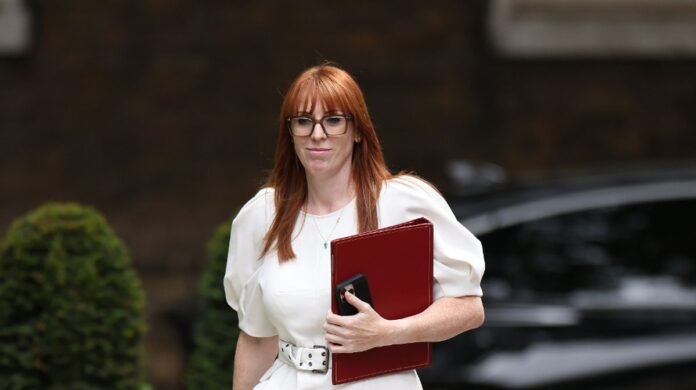

Angela Rayner has made a significant comeback to the government by assuming the role of Housing Secretary in Andy Burnham’s new Cabinet. Previously known as Labour’s Red Queen, Rayner re-enters the government scene after stepping down from her positions in Sir Keir Starmer’s cabinet, including Labour’s deputy leader and deputy prime minister, due to tax-related issues last year. The HMRC has since cleared her of any misconduct.
Earlier this year, Rayner was seen meeting with Burnham in Greater Manchester, indicating her support for his leadership aspirations. A staunch socialist, Rayner advocated for Labour’s workers’ rights agenda during her previous cabinet tenure.
The return of the former Deputy PM to government follows a period of speculation about potential leadership challenges. Rayner’s appointment as Housing, Communities and Local Government Secretary came after the general election, where she played a key role in championing the passage of the Employment Rights Act. A prominent figure on the left wing of the party, she criticized Shabana Mahmood’s immigration policies as “un-British,” although she is expected to align with government policies upon her return.
The revamped Cabinet also saw the appointment of new faces such as Education Secretary Lucy Powell and Chancellor John Healey, who previously resigned as Defence Secretary. Healey criticized his predecessors, Rachel Reeves and Starmer, for inadequate defense funding and now heads the Treasury. Wes Streeting, who resigned in protest against Starmer’s leadership, has reclaimed his former position.
Foreign Secretary Ed Miliband attended his first Cabinet meeting, while Shabana Mahmood retained her position as Home Secretary after unveiling extensive asylum system reforms. Yvette Cooper, a seasoned leader in various government departments, was reassigned to Health Secretary.
Notable Cabinet returnees include Chancellor of the Duchy of Lancaster Louise Haigh and Education Secretary Lucy Powell. The new Cabinet also features Burnham’s allies Anneliese Midgley and Energy Security Secretary Miatta Fahnbulleh.
The Prime Minister, who assumed office recently, promised significant changes for the UK. He announced an £850 million tax cut on energy bills to alleviate the cost-of-living challenges, funded in part by discontinuing Starmer’s digital ID project. This move aims to provide financial relief to households and inject hope into the populace.
Furthermore, the government emphasized its commitment to addressing pressing issues like rough sleeping and inflation. The energy tax cut initiative is designed to ease financial burdens on families and bolster economic stability nationwide.
The latest Cabinet reshuffle underlines Burnham’s leadership style, with notable exclusions of key figures from Starmer’s camp. The government’s swift actions reflect a proactive approach to governance and addressing urgent public concerns.