
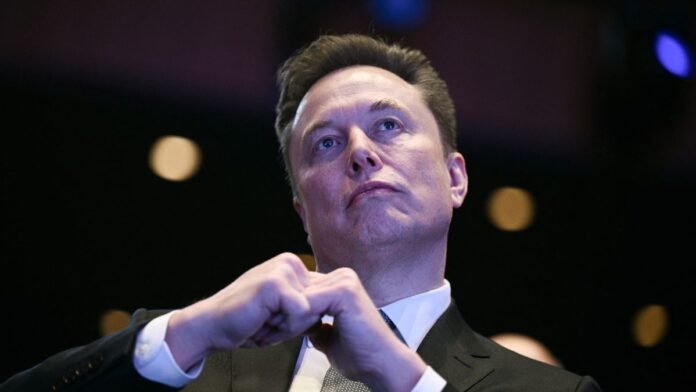

Elon Musk announced that his generative AI, Grok Imagine, is set to produce an authentic adaptation of Homer’s legendary poem, The Odyssey, within a year. This declaration followed an incident where a Grok user utilized the AI to create a trailer and a scene from the poem, which was criticized for its historical inaccuracies.
Musk unveiled a three-minute AI-generated clip depicting scenes where Odysseus bids farewell to his wife, Penelope, embarks on a journey to Troy, engages in a brief skirmish with the Trojans, and eventually lands on the shores of Ogygia, home to the nymph Calypso. The narrative progresses as Odysseus and Calypso spend seven years together before Odysseus resolves to return to Ithaca.
The clip, garnering over three million views, received acclaim for its perceived historical precision compared to Christopher Nolan’s recent film adaptation. Critiques mainly revolved around the casting choices, such as a Black actress portraying Helen of Troy in Nolan’s movie. Some viewers noted discrepancies in the AI-generated characters’ appearances, like Odysseus sporting red beard hair despite his origin in Ithaca, where brown hair is more prevalent.
Moreover, the portrayal of Calypso with blonde hair was questioned, considering her Mediterranean background. Criticism also addressed the inclusion of mythical creatures in a story deeply rooted in mythology. Concerns were raised about AI’s role in filmmaking, with users advocating for human actors and creative interpretations rather than absolute historical accuracy.
Nolan’s rendition of The Odyssey recently hit theaters and is on track to become his highest-grossing film, with global earnings surpassing $250 million. The star-studded cast includes Matt Damon as Odysseus, Tom Holland as Telemachus, Zendaya as Athena, Anne Hathaway as Penelope, and Charlize Theron as Calypso. Lupita Nyong’o takes on the roles of both Helen and Clytemnestra, facing backlash along with Elliot Page for playing Sinon.