
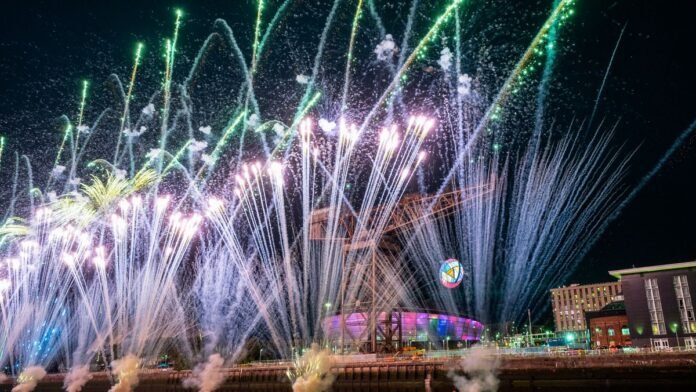

Glasgow 2026 has been praised as a model for upcoming Commonwealth Games. The event showcased a new format utilizing existing facilities, selling over 430,000 tickets and proving to be a major success.
According to Phil Batty, CEO of Glasgow 2026, the Games have set a standard that can inspire more nations to host, making it a feasible option for any country in the next century. This successful event not only saved but also reinvented the Commonwealth Games.
The closing ceremony featured a performance by Jim Kerr and Simple Minds. The total cost projection for the Games was £162.6m, significantly lower than previous editions in Glasgow 2014 and Birmingham 2022.
Netball emerged as the most popular sport, with over 100,000 tickets sold. English powerlifter Mark Swan clinched the first gold medal out of the 215 events offered.
Participants praised the event, with a more compact program of 215 medal events compared to 261 in 2014. The Games also introduced a record of 47 para-sports events, including the presentation of the first para-gold medal.
Australia led the medal tally with 171, followed by England with 110. The host country secured fifth place with 39 medals, behind Canada and India. First Minister John Swinney hailed the performance as “truly historic.”
Welsh cyclist Emma Finucane made history by winning four track gold medals at the same Games, while Australian bowler Louise Hoskins became the oldest gold medalist at 76 years and 173 days. South African swimmer Chad le Clos became the most decorated athlete in the event’s 96-year history with 21 medals.
Royalty, including Prince William and Princess Kate, attended the Games with their children. Mile world record holder Josh Kerr delighted fans by spending 45 minutes taking selfies and signing autographs after his emotional medal ceremony.