
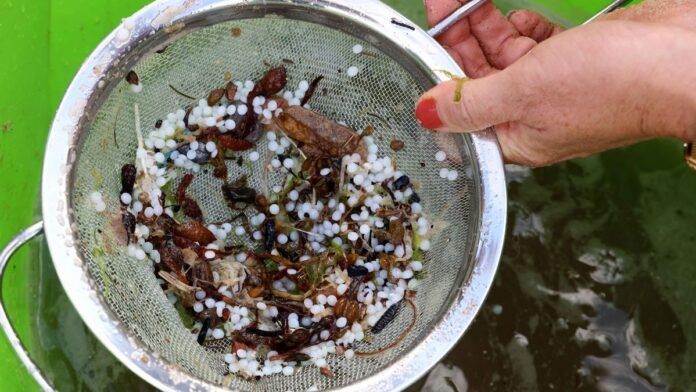

Following a vessel collision with a shipping container in South Shields on July 19, a charity focused on preserving the River Tyne has labeled the release of one billion plastic pellets into the river as an “environmental catastrophe.” The incident, involving tons of tiny plastic beads known as nurdles, is considered Europe’s most severe nurdle pollution event to date.
The Chief Executive, Sophia Stovall, expressed concern about the long-term impact of the spill, stating that fish have already been found with nurdles in their systems, as confirmed by fishermen during the gutting process.
The Port of Tyne acted promptly to contain the spill’s effects, and an investigation by the Environment Agency is currently underway to address the situation.
Approximately one billion plastic pellets were discharged into the river within a brief five-second period when the container ruptured, leading to an extensive clean-up operation. Specialist contractors, along with numerous volunteers, have been working diligently to remove the pellets, which have been washing up on beaches across northeast England.
Despite efforts to mitigate the impact, the charity remains concerned that the presence of nurdles in the river may persist for years, potentially threatening the diverse fish species and salmon fishing for which the River Tyne is renowned.
Port CEO Matt Beeton acknowledged that the spill occurred within seconds of the collision, highlighting the rapid escalation of the incident. The Port was unaware of the container’s contents until the day after the incident, prompting immediate action to address what was classified as a significant environmental emergency.
Due to access restrictions imposed by a police cordon, the response efforts were delayed until the next day, July 20. It was only then that the Port could engage global experts, remove the containers, and deploy containment measures.
Mr. Beeton emphasized that the spillage was reported to local authorities on the same day, once surveillance footage revealed the presence of nurdles in the river, prompting a coordinated response to address the environmental impact of the incident.