
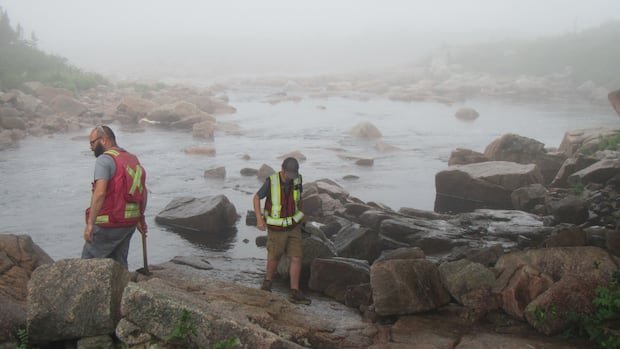

Increasingly severe wildfire seasons pose challenges for geoscience work in Newfoundland and Labrador, impacting operations in rural and remote areas critical for the mining industry. Fires can render work areas inaccessible, leading to the diversion of aircraft meant for scientific fieldwork to assist in wildfire response efforts.
This situation has added complexity to the planning and scheduling of scientific programs, with Minister Lloyd Parrott noting that the work continues despite the disruptions caused by wildfires. In a recent budget review meeting, Parrott attributed a budget underspend on transportation for geophysical survey work to reduced helicopter usage, largely due to wildfires.
Geological survey scientists rely on helicopters, especially in areas like Labrador, where land access is limited. Factors such as adverse weather conditions and wildfires can disrupt helicopter travel, impacting fieldwork activities. Despite these challenges, the survey’s work is progressing.
Recent projects, including collaborations with the federal government, have focused on data collection for rare earth elements in southeastern Labrador and geophysical surveys in the White Bay area. The Geological Survey of Newfoundland and Labrador currently has ten active field projects, with a mix of activities in Newfoundland and Labrador, including planned airborne surveys.
The industry recognizes the value of public geoscience in driving investment, de-risking projects, and informing decision-making. Amanda McCallum, executive director of Mining Industry N.L., emphasized the importance of these efforts and called for increased support.
Private exploration spending in the province is at record highs, with forecasts indicating a significant increase compared to the previous year. McCallum highlighted the positive impact of this investment, stressing the importance of public geoscience in attracting foreign direct investment.
While wildfire disruptions may necessitate adjustments in fieldwork schedules, industry players are adapting to ensure project continuity. McCallum noted the sector’s resilience in managing these challenges, with no reported cancellations of planned work due to wildfires.
Mining remains a key contributor to the province’s GDP, with active mines and significant employment numbers. Despite ongoing wildfire concerns in certain regions, the overall wildfire risk level in Newfoundland and Labrador is currently low. The year has seen fewer fires compared to the previous year, although the total area burned has been larger.
The mining sector continues to drive economic growth in the region, with ongoing exploration activities contributing to job creation and industry development.