
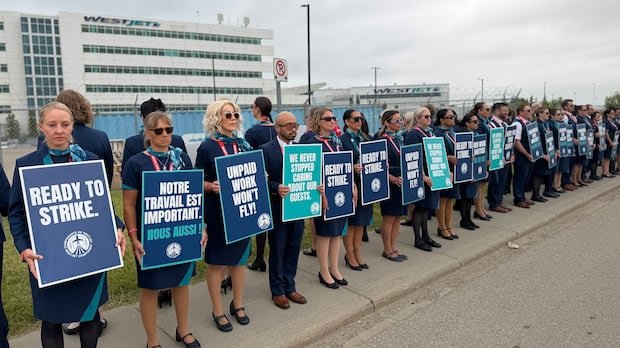

WestJet, the second-largest airline in Canada, is making preparations to gradually cease operations in anticipation of a potential strike or lockout involving its flight attendants. However, the implementation of this plan does not necessarily indicate an imminent labor dispute, as discussions between the union and the company are still ongoing.
According to a communication from WestJet’s vice-president of inflight operations, Robert Antoniuk, the agreement reached between the union and the airline focuses on the orderly shutdown of operations in case negotiations fail, rather than a step towards escalating labor action. The union, represented by CUPE, has emphasized their desire for a fair deal without resorting to a strike.
Federal mediators are actively engaged in the negotiation process, as confirmed by federal Transport Minister Steven MacKinnon, who expressed optimism about the ongoing talks potentially leading to a mutually acceptable agreement.
John Gradek, a former director at Air Canada and current faculty member at McGill University specializing in supply networks and aviation management, highlighted the necessity for airlines like WestJet to have contingency plans in place to avoid logistical challenges in case of a shutdown. He emphasized the importance of pre-positioning resources to prevent operational disruptions, especially in the case of international flights.
While WestJet has not announced any flight cancellations related to the labor dispute, the airline has offered to waive cancellation or change fees for passengers traveling between July 30 and August 4, with some passengers receiving credits for future use. The union members, represented by CUPE WestJet Component, have shown overwhelming support for a potential strike if an agreement is not reached.
A key issue in the negotiations has been the compensation structure for flight attendants, with concerns raised about unpaid work hours. The union has argued that flight attendants are not adequately compensated for all their duties, leading to discrepancies in pay. This ongoing dispute echoes previous labor challenges faced by airlines, including Air Canada, underscoring the importance of fair compensation practices in the industry.
WestJet’s current pay system for flight attendants revolves around “credit hours,” which may not fully account for all work hours spent on duty. Despite the airline’s stance that flight attendants are compensated for all hours worked, the union remains steadfast in seeking a resolution to address what they perceive as unpaid work issues.
The history of labor disputes in the aviation industry, including WestJet’s past experiences, highlights the complexities and challenges inherent in reaching consensus on labor practices within the sector. As negotiations continue, both parties strive to find common ground to avert potential disruptions to air travel services.