
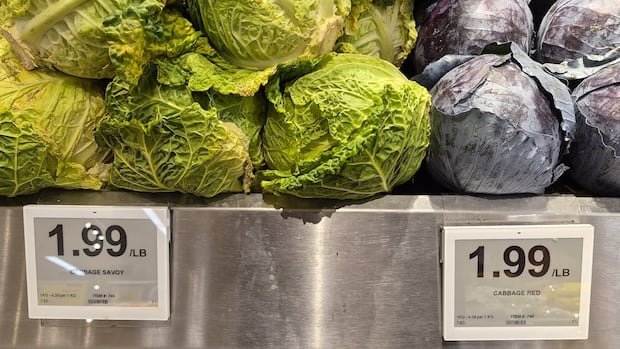

Loblaw has decided to reinstate country-of-origin labeling on produce signs in its stores after facing significant backlash from customers. The controversy arose when shoppers noticed that the information indicating where the food was grown was missing from produce displays.
Karla Hennig, a dedicated “Buy Canadian” shopper from Penticton, B.C., expressed disappointment at the absence of this information at her local Superstore, emphasizing the importance of knowing what one consumes. The removal of origin details was observed in Loblaw stores nationwide, except in Ontario and Quebec, where provincial regulations mandate such transparency.
In response to the policy change initiated just before Canada-U.S. trade talks collapsed, customers in various provinces took to social media platforms to criticize Loblaw’s decision. Edmonton resident Karl Mueller, upon discovering the lack of country-of-origin labeling at his local Real Canadian Superstore, voiced his concerns on social media and directly to the chain’s management.
Agricultural economist Ellen Goddard predicted Loblaw might reverse its decision amid heightened emotions due to ongoing trade uncertainties with the United States. Subsequently, Loblaw announced its plan to reintroduce country-of-origin information in produce aisles and use a “T” symbol on shelf labels for American products affected by U.S. tariffs.
The response from shoppers to Loblaw’s reversal has been cautiously optimistic, with Mueller highlighting the impact of consumer actions on corporate decisions. Despite defending its initial stance citing sourcing challenges, Loblaw’s reconsideration reflects the significance of customer feedback and the importance of supporting local businesses.
The move to eliminate country-of-origin labeling initially was influenced by past regulatory issues faced by Loblaw, notably fines and warnings from the Canadian Food Inspection Agency for incorrectly promoting imported food as Canadian. Similar incidents in the industry, like Sobeys ceasing to use maple leaf symbols to promote Canadian products, have prompted discussions on the need for clearer federal regulations on origin labeling for bulk produce.