
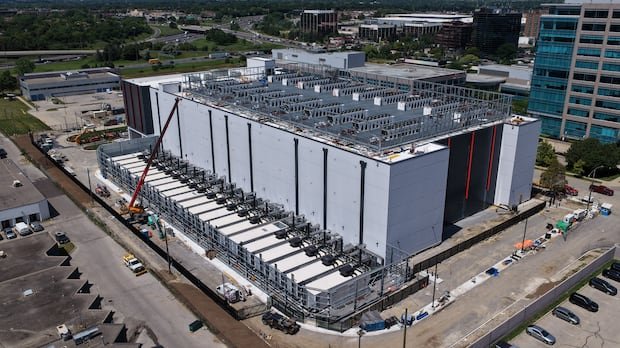

Ontario’s new data center framework, recently introduced by Premier Doug Ford in Guelph, is expected to assist municipalities in managing the presence of large-scale data centers within their communities, according to industry experts and political figures. The framework, focused on economic development, data protection, community investment, and public confidence, aims to standardize data center approvals across different regions.
Carmi Levy, a technology analyst based in London, Ontario, highlighted the importance of these guidelines in establishing a consistent approach among municipalities. He emphasized the significance of the provincial government’s initiative in providing a structured framework, as opposed to the previous decentralized decision-making process.
The framework sets out requirements for data centers to contribute both financially and non-financially to host communities through initiatives such as job creation, training programs, and infrastructure development. It also mandates that data centers cover the full cost of their electricity consumption, ensuring that residents are not burdened with any additional costs.
Premier Ford emphasized the need for data centers to invest in their own power generation and adhere to higher electricity rates, separate from existing industrial tariff programs. This move is aimed at safeguarding Ontario families from bearing the financial impact of data center operations.
Furthermore, the framework emphasizes leveraging Ontario’s advantageous factors, such as its cool climate and skilled workforce, to attract new data centers. It also encourages the adoption of environmentally-friendly technologies within data center operations, including noise-reduction engineering and closed-loop cooling systems to minimize environmental and community disruptions.
The announcement of the framework comes at a time when various municipalities in Ontario are deliberating on their approach towards data centers. While some have opted for moratoriums on data center developments, others are conducting reviews and studies to assess the potential impacts of such facilities on their communities.
Despite the positive reception of the framework, some local officials, like Strathroy-Caradoc mayor Colin Grantham, remain cautious about large-scale data center projects in their areas. Grantham stressed the importance of implementing further legislation to address environmental, energy, and location-related concerns associated with data centers.
Looking ahead, industry experts anticipate the introduction of comprehensive provincial and federal legislation to regulate data center operations more effectively, aligning with broader national strategies in the digital economy. The evolving landscape of data centers necessitates a balanced approach that considers economic growth alongside environmental and community considerations.