
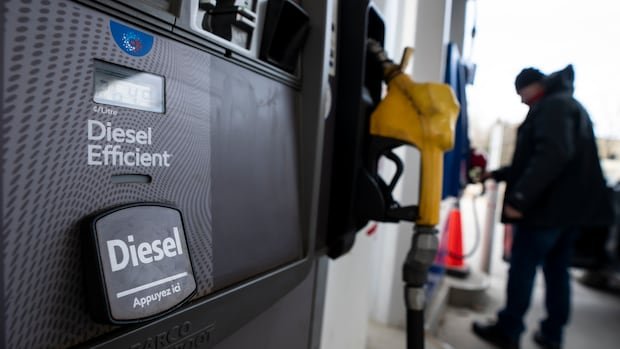

The surge in diesel prices exacerbated by global conflicts is significantly impacting the cost of fueling trucks responsible for transporting goods across Canada, experts reveal. Tej Dulat, from the Canadian Truck Operators Association, emphasized the substantial impact on trucking companies due to the increased fuel expenses. With commercial trucks consuming large quantities of fuel weekly, rising prices have put pressure on profit margins since the 2022 price hike following the Russia-Ukraine conflict.
Diesel prices in Canada have reached $2.62 per liter, surpassing previous highs and marking a substantial increase from last year’s rates. Vancouver recorded even higher prices at $2.92 per liter, reflecting the escalating trend. The United States also faces record-high diesel prices, exceeding $6 US per gallon, causing ripple effects across the nation.
While recent focus has been on tariff impacts on Canadian goods, the surge in oil prices highlights the dominant influence of geopolitical conflicts on current price hikes. The ongoing U.S.-Israel conflict with Iran, a key factor in maintaining high gas prices, poses a potential spillover effect on other goods. The scarcity of diesel, exacerbated by geopolitical tensions and production disruptions, is contributing to the supply shortage, further intensifying the crisis.
In response to the escalating situation, the federal government has extended the suspension of the federal fuel excise tax, providing temporary relief but falling short of addressing the full extent of rising costs. Experts warn of the adverse economic repercussions if the crisis persists, underscoring the urgent need for effective solutions to mitigate the impact on the North American economy.
As winter approaches, concerns arise over the expected surge in diesel prices, historically peaking during the season. The anticipated rise in costs not only affects transportation industries but also impacts consumers and the entire food supply chain. The combination of various factors, including extreme weather conditions affecting harvests, is creating significant upward pressure on food prices, potentially leading to a prolonged period of elevated costs and economic challenges for low-income Canadians.