
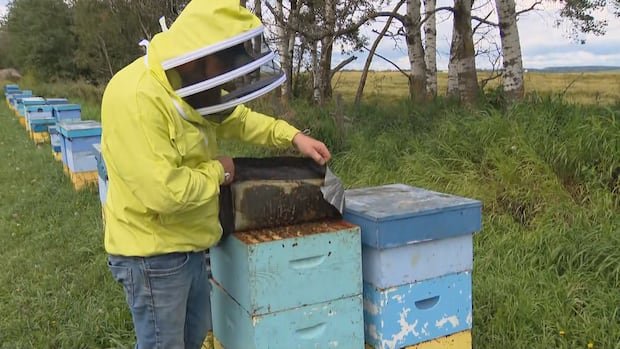

Harvest operations are currently underway at a family-operated honey farm in central Alberta. However, there is a sense of apprehension surrounding this year’s honey production due to concerns over a trade agreement with the United States. Lorne Prins, the owner of Gull Lake Honey located around 130 kilometers south of Edmonton, expressed frustration over the situation. The farm, which spans almost 90 locations in the heart of Canada’s primary honey-producing province, maintains close to 3,000 hives.
The looming deadline of August 19 has left numerous local producers, including Prins, anticipating a significant impact. The proposed 50 percent tariff on honey by the U.S. could potentially restrict access to their largest export market. This unexpected threat emerged in July from the U.S. administration, citing alleged unfair trade practices. Previously, Canadian honey was exempt from tariffs under the Canada-U.S.-Mexico Agreement (CUSMA).
The wet weather conditions earlier in the summer had already raised concerns about honey production levels for the year, adding to the worries caused by the possibility of U.S. tariffs. Rod Scarlett, the executive director of the Canadian Honey Council, conveyed surprise and shock at the inclusion of honey among the goods facing potential tariffs. The honey industry nationally raked in over $241 million in revenues in 2025.
Although Prins primarily sells locally, he foresees negative impacts from the new tariffs, anticipating a drop in domestic honey prices if Canadian exporters lose their key international market. Approximately 70 percent of Canadian honey exports head to the U.S., prompting a surge in shipments over the past two weeks as producers rushed to transport their goods before the tariffs come into effect.
Barbara McKenzie, the executive director of the Alberta Beekeepers Commission, emphasized the catastrophic consequences Canadian producers would face if access to the U.S. market is lost. A recent survey conducted by the organization revealed that many producers expect an immediate collapse in exports, jeopardizing their ability to support their bees through the winter and replenish hive losses.
The potential ripple effects extend beyond honey production, impacting pollination activities critical for canola, fruit, and vegetable crops. The agriculture industry could face billions of dollars in losses if the tariffs are enforced, affecting various sectors. Despite ongoing negotiations between Canada and the U.S., local beekeepers like Jeremy Olthof from Tees Bees are left hoping for a resolution before the trade deadline looms closer.