
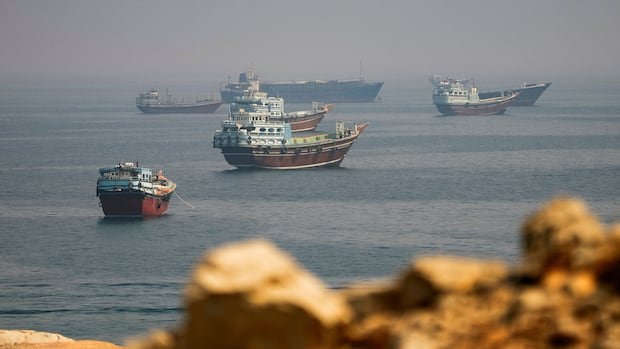

The United States conducted fresh airstrikes targeting Iranian sites on Tuesday, raising concerns of escalating the ongoing conflict that has impacted global energy prices and had implications on President Donald Trump’s domestic approval ratings. These strikes were in response to recent incidents, including attacks on tankers leaving the Strait of Hormuz, a critical waterway for global oil supply that Iran has effectively restricted. Consequently, oil prices surged by over $4 per barrel, reaching a five-week peak.
In retaliation, Tehran targeted U.S. assets in Jordan, Bahrain, and Iraq, vowing to impede oil exports from the Gulf. Despite Trump’s threats of severe consequences and warnings of impending sanctions by U.S. Treasury Secretary Scott Bessent, Iran remained defiant. Tragically, a wedding near Sirik, a coastal area near the Strait of Hormuz, witnessed casualties, including fatalities and injuries, as reported by the Iranian Red Crescent and Mehr news agency.
The U.S. did not immediately respond to these developments. The Iranian Revolutionary Guard Corps (IRGC) asserted that the American actions would further disrupt the flow of oil through the Strait of Hormuz, a vital passage for global oil trade. The situation marks a departure from the recent lull as both nations engaged in hostile actions and rhetoric, with Trump emphasizing retaliatory measures against perceived Iranian provocations.
The conflict escalated further with reported attacks on U.S. military bases in Jordan, Bahrain, and Iraq by Iranian forces. While casualties were not confirmed, the situation remained tense, with ongoing military actions on both sides. Amidst the turmoil, prospects of a new ceasefire seemed bleak, as Trump expressed skepticism about the efficacy of future agreements with Iran. The U.S. Embassy in Qatar advised caution to Americans in the Middle East due to potential disruptions in travel and airspace closures.
Efforts to mediate the crisis and reopen the Strait of Hormuz have faced challenges as both Iran and the U.S. asserted control over the strategic waterway. The standoff has significantly impacted energy exports from the region, with no immediate resolution in sight. Additionally, the U.S. hinted at imposing further sanctions on Iran, aiming to intensify economic pressure on the country and its affiliates.
As tensions persist and the conflict shows no signs of abating, the international community closely monitors the unfolding events in the region.