
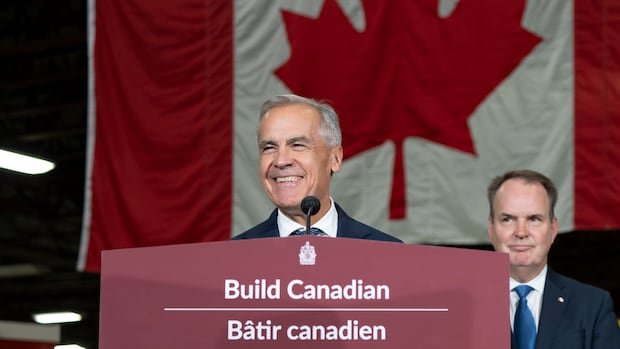

Prime Minister Mark Carney has rejected recent statements made by U.S. cabinet members challenging the Canadian government’s explanation for exiting trade negotiations. During a speech in Thunder Bay, Ont., Carney expressed his view that appointed, unelected U.S. cabinet members are not well-versed in Canadian politics.
Following the decision to recall Canada’s negotiating team to Ottawa on August 21, Carney and chief trade negotiator Janice Charette have consistently maintained that the U.S. introduced last-minute changes deemed unfair and economically unfavorable by the Canadian government. Carney highlighted that these changes would have constrained Canada’s ability to engage in trade agreements with other nations, weakened cultural protections for the French language, and harmed the auto industry in the long term.
Carney criticized the United States for its rigid stance during negotiations, emphasizing their sudden indifference towards Canadian language and culture after including them in the deal. This contradicts the narrative presented by the Trump administration following the collapse of the agreement.
In response to U.S. Commerce Secretary Howard Lutnick’s remarks suggesting that Canada’s withdrawal was politically motivated, Carney emphasized the importance of recognizing Canada’s non-negotiable positions before resuming talks with the U.S. He stressed the need for a mutually beneficial and enduring trade deal that respects Canada’s red lines regarding language, culture, and trade agreements with other countries.
Despite conflicting narratives from the U.S., Carney remains firm on Canada’s priorities and requirements for returning to the negotiating table. He dismissed criticisms from U.S. officials on social media and underscored the need for the U.S. to acknowledge the integrated nature of the auto industry that spans both nations. Carney also condemned the derogatory remarks made by senior U.S. officials, stating that such behavior is unbecoming of their positions.
Overall, Carney emphasized that any future trade agreement must ensure stability, prevent the sudden reimplementation of tariffs, and address the competitiveness of key sectors like automobiles, steel, and aluminum.