
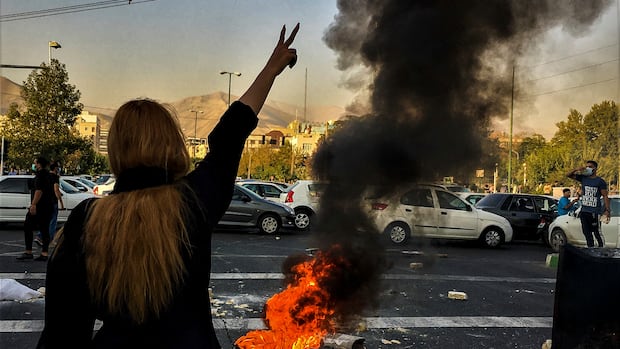

Four years following the tragic passing of a young woman whose name has become emblematic of the struggle for women’s rights and freedoms in Iran, Amnesty International asserts that the ensuing government repression represents a systematic campaign, with those responsible still evading justice.
Mahsa Amini, at the age of 22, died on September 16, 2022, after being detained by Iran’s morality police for wearing “improper attire.”
The Amnesty report released on Wednesday — a comprehensive effort based on 270 interviews, over 2,000 videos, and extensive documentary evidence — claims that the same officials are currently leading violent crackdowns. It names numerous officials who are allegedly accountable for what it describes as crimes against humanity.
The authors are calling for international intervention to prevent the continuation of what they describe as a pattern of lethal crackdowns that has persisted for years.
“Ongoing global inaction regarding international justice sends a perilous message to Iranian authorities, effectively indicating that they can carry on committing crimes against humanity without facing consequences,” stated Raha Bahreini, Amnesty International’s Iran researcher based in London, during an interview with CBC News.
“This normalization of mass killings during protests in Iran must come to an end.”
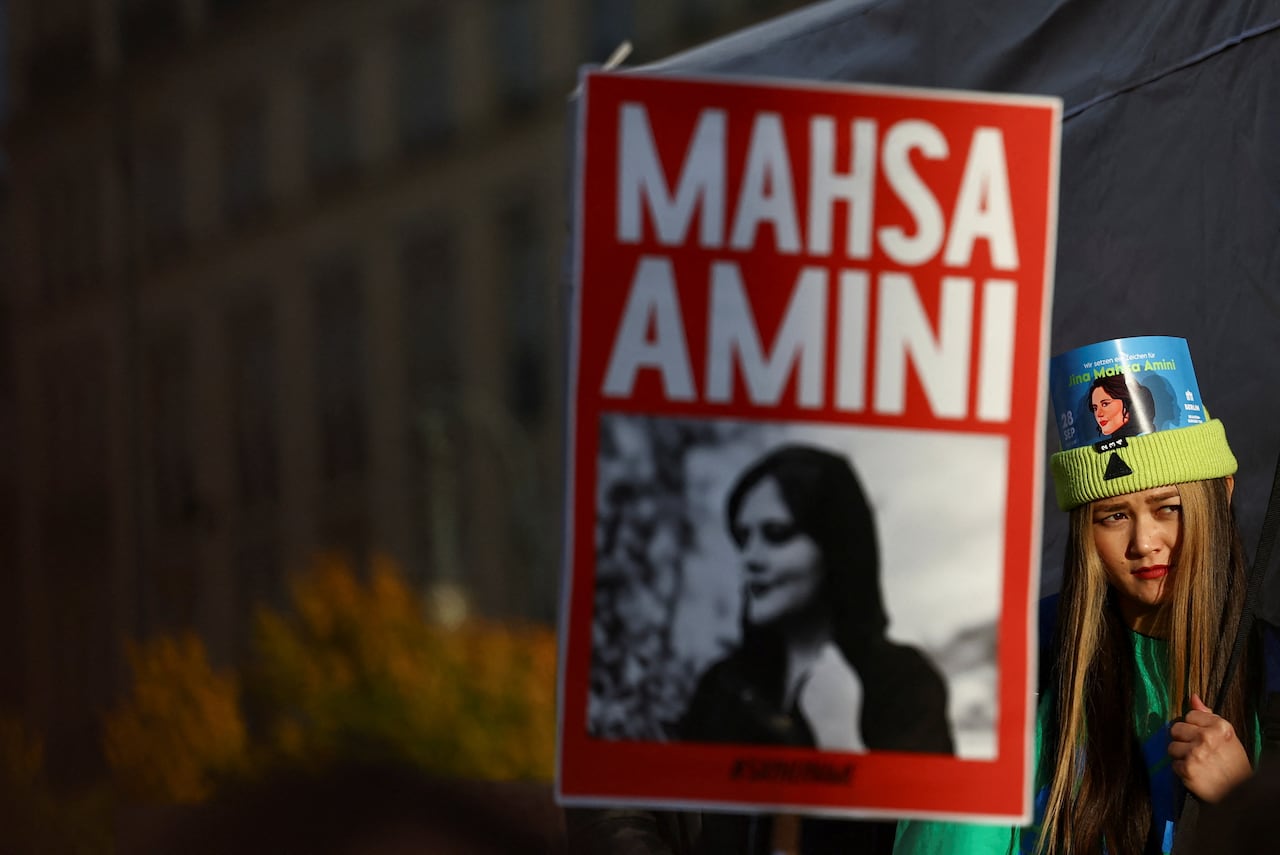
The image of Mahsa Amini, captured in Berlin, garnered global attention in 2022 following her death, which ignited worldwide protests. (Lisi Niesner/Reuters)
Mahsa Piraei’s mother was killed by security forces during a protest in Kermanshah amid the 2022 uprising. During a news conference on Wednesday to announce the report, she emphasized that accountability for her mother’s death, along with that of hundreds of other Iranians, “must ascend the chain of command.”
“The individual who fired the shot that took my mother’s life must face justice, but that cannot be the end of it,” said Piraei, who resides in the U.K.
“My mother was not killed due to the actions of a single person. She was a victim of a system … And those at the highest levels of authority oversaw this violence.”
Piraei mentioned that officials from Iran’s Intelligence Ministry only permitted her family to view her mother’s body if they agreed to label her as a bystander rather than a protester.
“They aimed to conceal the truth, but their efforts were in vain.”
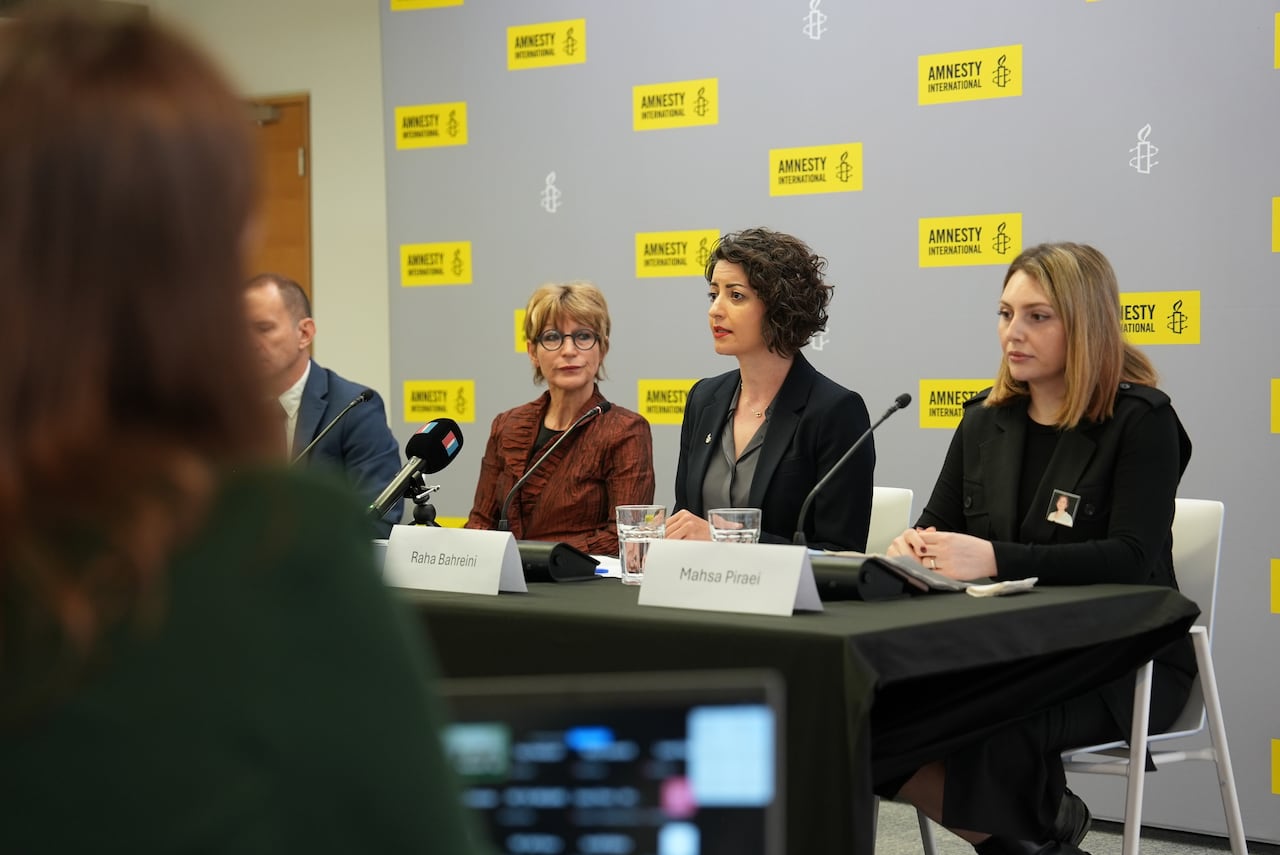
Amnesty International published a significant report on Wednesday, asserting that Iranian authorities committed crimes against humanity during the suppression of the 2022 Woman, Life, Freedom uprising. Secretary General Agnès Callamard, left, spoke during a news conference in London alongside Raha Bahreini, Amnesty International’s Iran researcher, and Mahsa Piraei. (Adrian Di Virgilio/CBC)
Thousands killed in protests earlier this year
The U.K.-based NGO details the evidence it claims indicates crimes against humanity, such as murder, torture, enforced disappearances, imprisonment, rape, and persecution based on political, gender, ethnic, and religious grounds to suppress the uprising.
While the protests earlier this year were initially ignited by economic issues stemming from soaring inflation and declining living conditions, rather than the death and rights violations of women, Amnesty noted that the backlash reflected broader demands for political reform and was met with the same security forces accused of violently quelling the 2022 uprising.
In the case from January, the U.S.-based Human Rights Activists News Agency reported that it had confirmed 7,007 deaths linked to the protest suppression.
“The cycles of protest crackdowns in Iran follow a painfully familiar pattern. They capture news headlines for a brief period, governments issue statements of condemnation, and then interest wanes,” Bahreini remarked.
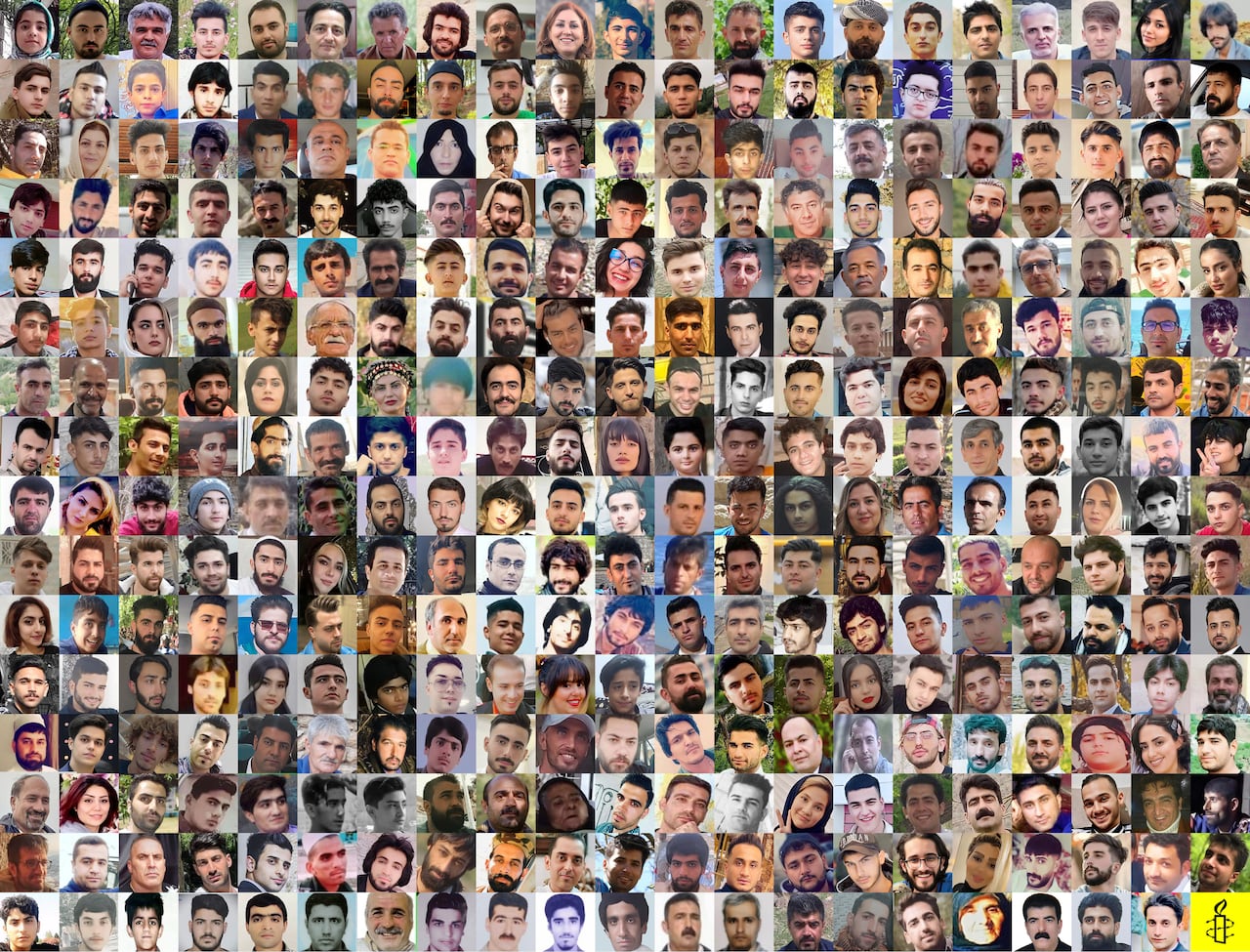
Images of the victims from the fatal 2022 crackdown on widespread protests in Iran following Amini’s death, which sparked the Woman, Life, Freedom movement. (Amnesty International)
Minority groups disproportionately targeted, report says
Amini, a Kurdish-Iranian woman, passed away three days after slipping into a coma while in police custody.
Her Kurdish name Jina (or Zhina), signifying “life” in Kurdish, continues to be used by Kurdish activists and rights organizations — embodied in the slogan of the Woman, Life, Freedom movement.
The protests ignited by Amini’s death initiated a sequence of unlawful killings that began in the Kurdistan province, according to the Amnesty report.
The report found that Iranian authorities disproportionately targeted Kurdish and Baluchi communities, who predominantly practice Sunni Islam in a largely Shia nation, with “lethal repression.”
Both groups reportedly experienced a “devastating share” of fatalities in 2022, accounting for approximately 62 percent of the total known victims, despite making up no more than 15 percent of the country’s population.
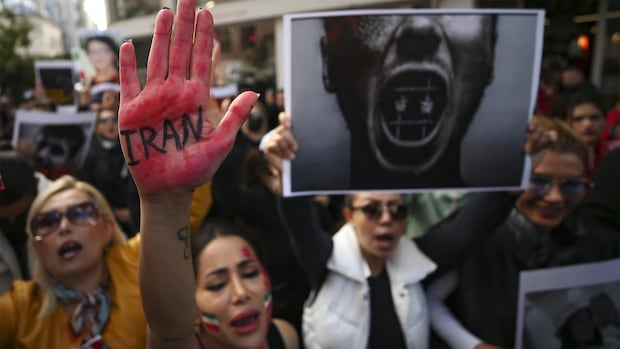
CNN’s chief international anchor Christiane Amanpour discusses Iran’s morality police and the significance of women’s rights protests that arose after the death of 22-year-old Mahsa Amini while in police custody last month.
The report’s findings arrive at a time of armed conflict, as the U.S. and Israel declared war on Iran at the end of February, with negotiations currently stalled to resolve the prolonged regional conflict.
While U.S. and Israeli officials have primarily justified military operations against Iran based on security concerns — including its nuclear and missile initiatives — Amnesty cautioned against using the Iranian government’s human rights violations as a pretext for unlawful military actions.
In July, Trump condemned Iran’s leadership following the execution of two protesters, labeling officials as “savages.”
“Amnesty International firmly opposes violations of international law by all parties and rejects any attempts to exploit the suffering of victims of human rights abuses in Iran to justify unlawful attacks that further harm civilians,” stated Secretary General Agnès Callamard.
-
Mahsa Amini, who died in Iranian police custody, awarded Sakharov human rights prize
-
What’s happening in Iran? Breaking down the deadly protests shaking the country
Amnesty reported that the protests in 2022 led to the deaths of 377 protesters and bystanders, including 56 children.
The majority of fatalities documented were individuals killed by security forces during the dispersal of protests between September and December, according to Amnesty, while others died in custody, after being released, as in Amini’s case, or under “suspicious circumstances indicating state responsibility.”
“In line with longstanding patterns of denial and cover-up, the authorities have acknowledged only 202 deaths, inaccurately attributing most to non-state actors, ‘rioters,’ or ‘armed terrorists,’ despite overwhelming evidence to the contrary,” Amnesty stated in a release.
The organization mentioned that it has shared its findings and the list of identified officials in the report with Iran’s Supreme Leader Mojtaba Khamenei and high-ranking security officials but has yet to receive a response.
Calls for criminal probes into 87 officials
In its report, Amnesty reveals what it describes as the command hierarchy behind the alleged crimes against humanity, naming a total of 87 officials it seeks to have investigated criminally.
“While the list is not exhaustive, it includes individuals from the highest tiers of Iran’s security apparatus to officials functioning at provincial and county levels,” Amnesty noted in a news release.
Among the 87 individuals identified, there are 10 national-level officials and 77 officials operating at regional, provincial, and county levels.
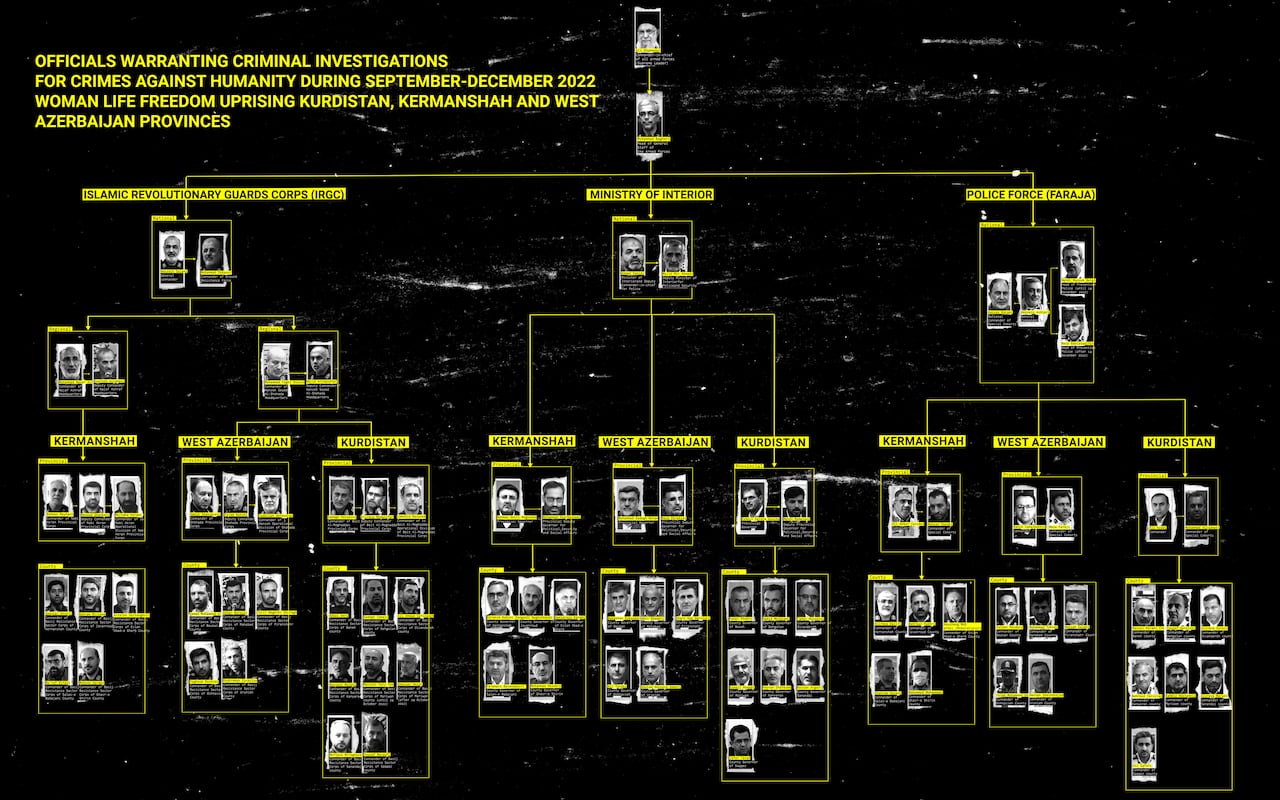
Amnesty’s investigation pinpointed 87 officials it argues must face criminal investigation for their alleged roles in executing state policy of lethal force to suppress nationwide protests. (Amnesty International)
The report highlights that among those named are the late Supreme Leader and commander-in-chief of all armed forces, Ali Khamenei, and the late head of the Chief of Staff of the Iranian Armed Forces, Mohammad Bagheri, both of whom were killed in February 2026 during airstrikes conducted amid the U.S.-Israeli military assault on Iran.
Amnesty International also identifies Ahmad Vahidi, who served as interior minister during the 2022 protests and subsequently became the commander of the Islamic Revolutionary Guard Corps in March. The report also mentions former deputy interior minister for police and security, Majid Mir Ahmadi.
“This investigation reveals the layers of command and coordination behind the Iranian authorities’ lethal crackdowns on protests,” Callamard stated.
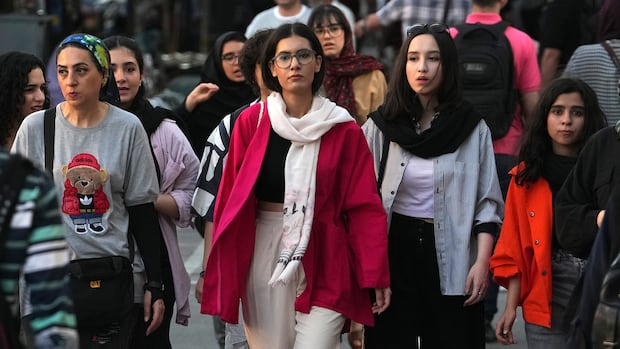
Mahsa Amini’s death while in the custody of Iran’s morality police for wearing her headscarf too loosely triggered months of protests in what became one of the biggest threats the Islamic regime has ever faced. One year later, CBC’s Ellen Mauro breaks down what’s changed and what hasn’t.
Spirit of resistance still alive
Despite the lethal repercussions since 2022, Bahreini noted that civil disobedience is now being exhibited with greater “courage.”
Although Iran’s hijab laws remain legally enforced for women, their enforcement has fluctuated in the years following the uprising.
“The Woman, Life, Freedom movement has achieved significant success in altering the societal perspective on adhering to discriminatory laws,” she remarked, pointing out that the authorities are wary of another uprising should the regulations be strictly enforced.
“While the authorities have succeeded in quelling street protests, they have failed to extinguish the spirit of resistance and defiance.”