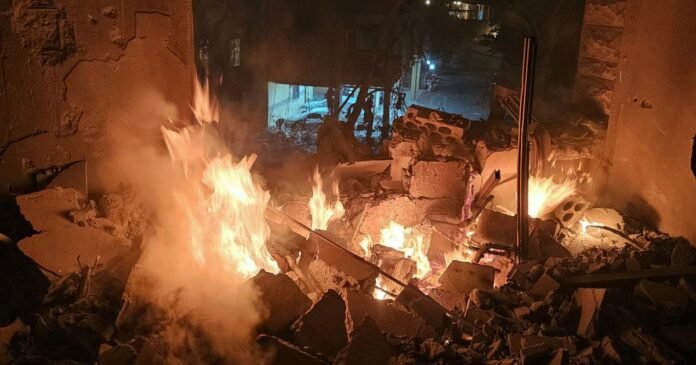

A joint operation by American and Israeli military strategists aimed at eliminating Iran’s leadership, specifically targeting Ayatollah Khamenei, has not achieved the desired outcome after three days of intense airstrikes. Despite initial expectations, Tehran’s command and control infrastructure remains intact, as confirmed by US intelligence reports.
This development suggests a significant miscalculation on the part of the US, potentially leading to a prolonged and bloody conflict as Iran appears inclined towards a war of attrition. Unlike his predecessors who relied on intelligence advice, US President Donald Trump’s approach seems to prioritize coercion and aggression.
While Israel’s focus is on ultimate victory, the US faces political and global repercussions. Defense Secretary Pete Hegseth’s assertion of precise and unapologetic strikes contrasts with the complex reality on the ground. Iran’s strategy seems geared towards exhausting US and Israeli military capabilities, possibly leading to a protracted engagement.
The potential depletion of defense resources could necessitate increased deployment of naval and air assets, impacting the already strained military inventory. This escalation could reveal the consequences of Trump’s impulsive decision-making and result in a significant military setback.
Furthermore, the conflict’s ripple effects extend to the global economy, with concerns over rising oil prices as a direct consequence of the escalating tensions. Amidst shifting narratives on potential regime changes in Iran, the specter of internal conflict looms, with the presence of hardline factions posing a threat to stability in the region.