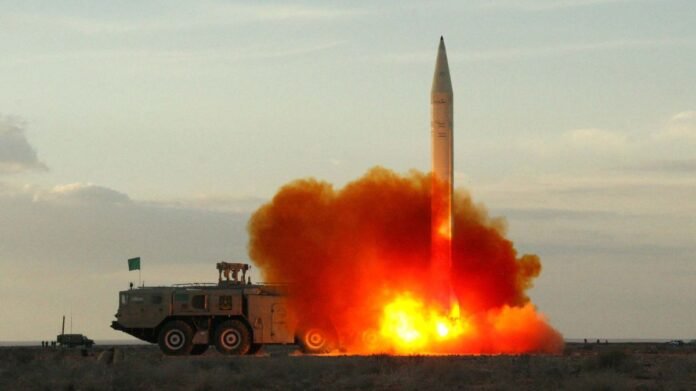

US interceptor missiles designed to counter incoming nuclear ICBMs may not be effective, as suggested by a nuclear war expert. In her book “Nuclear War: A Scenario,” investigative journalist Annie Jacobsen provides a harrowing account of a hypothetical North Korean attack on the US leading to a catastrophic nuclear conflict with significant casualties.
As global tensions rise due to US and Israeli-led actions against Iran, Annie has raised concerns about the challenges associated with missile defense systems in the US. During an interview on the Brad Carr podcast, she expressed doubts about the US’s capability to intercept or neutralize incoming missiles, citing the limited number of interceptor missiles in the country.
Annie pointed out that the US deploys 44 non-nuclear Ground-Based Interceptors (GBIs) at Fort Greely, Alaska, and Vandenberg Air Force Base, California, while Russia reportedly possesses 68 nuclear-tipped GBIs, highlighting a significant disparity in missile defense capabilities between the two nations.
She explained the complexities involved in intercepting an ICBM, emphasizing the high speeds at which these missiles travel and the technological limitations of the interceptor systems. Annie described the interceptor missiles as lacking sophistication, likening them to a “bowling ball” that needs to physically collide with the incoming warhead to disable it.
According to Annie, the US Missile Defense Agency described the challenge as akin to “hitting a bullet with a bullet,” with an alarming failure rate leading to a temporary halt in the interceptor missile program. Despite having 44 interceptors, Annie claimed that the US is not actively advancing development due to perceived ineffectiveness.
In conclusion, concerns persist over the adequacy of the US’s missile defense systems in countering potential nuclear threats, with experts like Annie Jacobsen shedding light on the limitations and challenges faced in this critical aspect of national security.