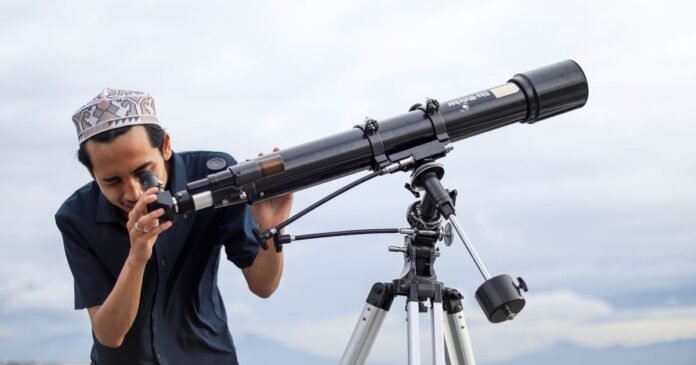

The global confirmation of Eid al-Fitr’s first day has been announced, marking the end of Ramadan, a month of fasting observed by Muslims worldwide. The festival begins on the first day of Shawwal, the tenth month in the Islamic lunar calendar, upon the sighting of the new crescent moon.
Saudi Arabia has officially declared that Eid al-Fitr will commence on Friday, March 20, following the non-sighting of the crescent moon after the Maghrib prayer. This confirmation came after religious scholars scanned the skies in the kingdom to determine the start of the festivities.
Saudi Arabia has also expressed support for a truce between Pakistan and Afghanistan, coinciding with Eid Al Fitr, underscoring its commitment to diplomatic efforts. While Saudi Arabia is traditionally influential in setting Eid dates due to its Islamic significance, other nations like Morocco operate based on their own moon-sighting systems, with some Muslim communities following Morocco’s calendar.
In Egypt, the festive spirit is palpable as families gather for Eid prayers and engage in social activities. Similarly, Malaysia’s Eid traditions focus on communal gatherings and homecoming rituals, while Indonesia sees a mass exodus to home villages for celebrations. Popular markets in these regions are bustling with shoppers preparing for the holiday with traditional items.
Various countries, including Australia, Singapore, Yemen, Lebanon, Palestine, Iraq, Bahrain, Qatar, Kuwait, Turkey, and the UAE, have confirmed the first day of Eid al-Fitr. The celebration’s timing is determined by the lunar sighting, reflecting the unique cultural and regional practices observed during the holiday.
In response to the ceasefire between Pakistan and Afghanistan, multiple countries have extended support, aligning with the spirit of peace and unity during Eid Al-Fitr celebrations. The diverse customs and traditions surrounding Eid across different regions underscore the rich cultural tapestry and communal celebrations that define this auspicious occasion.