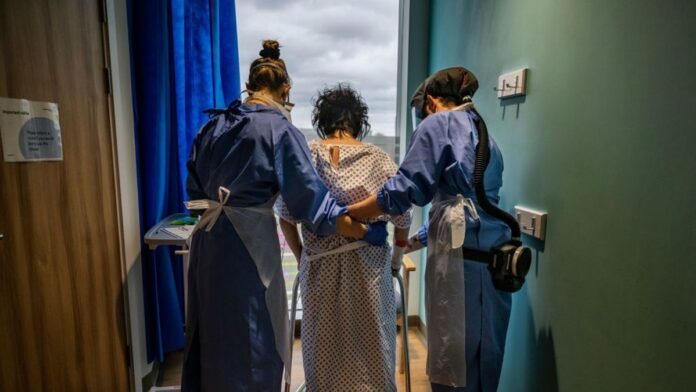

NHS workers were disheartened to hear Boris Johnson dismiss concerns about the NHS being overwhelmed during the UK Covid-19 Inquiry. Both Johnson and former Health Secretary Matt Hancock firmly denied that the NHS faced any overwhelming situations during the pandemic. However, firsthand experiences from patients, families, and frontline NHS staff painted a starkly different picture, now etched in history.
Baroness Heather Hallett, leading the inquiry, corrected the record by acknowledging that the NHS was indeed overwhelmed and came close to collapse, saved only by the heroic efforts of NHS personnel who risked their lives to care for others.
During the pandemic, numerous NHS and social care workers contracted and succumbed to the virus. The full extent of infections among healthcare workers will likely never be known, with many survivors still grappling with mental health repercussions. Some visibly expressed their frustration during inquiry hearings as politicians questioned the harsh reality they faced.
Matt Hancock asserted that measures were taken to prevent NHS overwhelm, while Boris Johnson claimed success in preventing healthcare system saturation. However, the reality was far from ideal, as healthcare workers had to make agonizing decisions about patient care due to overwhelmed facilities. The NHS had to halt planned procedures and delayed diagnoses, including for critical conditions like cancer.
Evidence presented at the inquiry highlighted the severe mental health toll on NHS intensive care staff, comparable to that of military personnel in combat zones. Nurses witnessed a drastic increase in patient deaths, with some wards experiencing eight deaths per shift, a stark contrast to pre-pandemic norms.
The NHS faced significant challenges due to a period of underfunding and neglect in the years preceding the pandemic. A shortage of intensive care beds and nursing vacancies further strained the healthcare system, with the UK lagging behind other developed nations in critical care capacity.
Despite the establishment of ‘Nightingale Hospitals,’ many remained unused as the healthcare system grappled with insufficient staffing levels. England entered the pandemic with a significant nursing shortage, a problem that persists to this day.
The decision to leave the NHS ill-equipped to handle a crisis was a political choice, and the current government will face scrutiny on whether they prioritize strengthening the healthcare system.