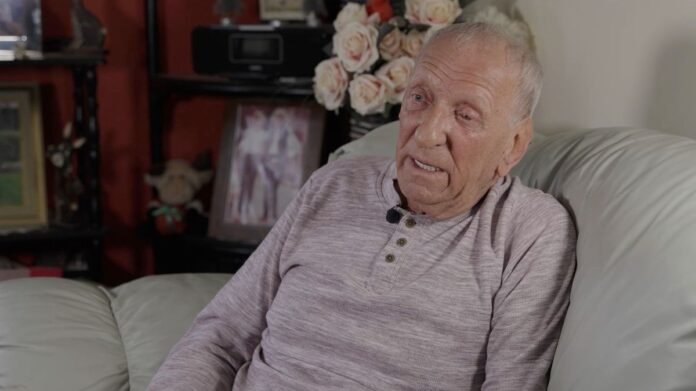

An 84-year-old man, Paul Cleeland, who served 26 years in prison for the murder of his underworld associate Terry Clarke in 1972, claims he was wrongly convicted and hopes that a new investigation into the miscarriage of justice will exonerate him. Cleeland alleges that an Essex gangster orchestrated Clarke’s murder due to suspicions of him being a police informant. He asserts that Reggie Kray, a notorious criminal, introduced him to one of the actual killers while they were both incarcerated at Parkhurst prison in the 1980s.
Cleeland recounts a conversation with Kray where he was informed about the man involved in Clarke’s murder seeking protection. Following Kray’s arrangement, Cleeland confronted the man, expressing his desire to uncover the truth behind the events of that fateful night. The man admitted to being hired by an Essex drug trafficker to carry out the murder, fearing Clarke would expose him to the authorities.
Despite Cleeland’s insistence on the man’s confession, he was convicted in 1973 for Clarke’s murder based on forensic evidence presented by John McCafferty, a principal scientific officer. Cleeland now challenges the reliability of the forensic tests conducted during his trial, claiming they were flawed and inadequately performed.
Recent developments reveal that Cleeland’s case is under review by the Criminal Cases Review Commission (CCRC) as part of the Forensic Opportunities Programme initiated following a high-profile wrongful conviction case involving Andrew Malkinson. Cleeland’s legal team remains optimistic about overturning his conviction, citing compelling evidence that discredits the forensic link between Cleeland and the alleged murder weapon.
The CCRC spokesperson confirmed the thorough examination of Cleeland’s case, stating that previous reviews did not find a substantial basis to overturn his conviction. Despite Cleeland’s efforts, including seeking judicial review, the outcome has been unsuccessful so far.