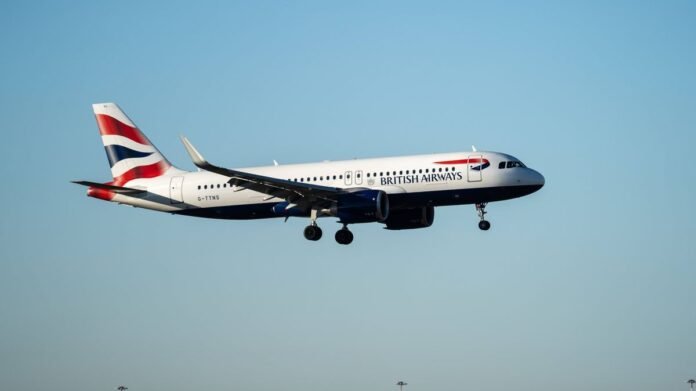

British Airways responded to reports of a deceased passenger left in a galley for 13 hours during a flight. The woman, in her 60s, passed away one hour into a journey from Hong Kong to London Heathrow aboard an Airbus A350-1000. Allegedly, the pilots continued the flight despite claims from passengers about a noxious odor emanating from the area.
An undisclosed source informed The Sun that the woman’s family and the crew were distressed by the situation. Several passengers purportedly expressed a desire to return to Hong Kong, although the airline did not classify the passenger’s death as an emergency.
A British Airways spokesperson conveyed to Express that a passenger had died on board and expressed condolences to the bereaved family and friends. The airline affirmed that proper procedures were followed and that crew members were being supported.
According to the source, the flight deck suggested storing the body in a restroom, but this proposal was declined by the crew. Instead, the body was wrapped and relocated to a galley at the rear of the aircraft. By the flight’s conclusion, a pungent smell was noticeable around the galley area, which featured a heated floor. Upon landing in the UK, authorities boarded the plane to investigate, delaying passengers for 45 minutes.
The source disclosed that there was a deliberation on how to handle the body, with the crew rejecting the flight deck’s proposal to secure it in a restroom. Therefore, the body was isolated, wrapped, and transferred to the galley at the rear of the plane. The galley’s heated floor, overlooked by some crew members, allegedly contributed to the foul smell experienced towards the end of the flight.
Instances of deaths during flights are infrequent, as reported by a study published in the New England Journal of Medicine in 2013, referenced by the BBC. Most airlines adhere to the guidance provided by the International Air Transport Association on protocols for handling a deceased passenger during a flight. The guidance includes closing the deceased passenger’s eyes, placing the body in a body bag if available, or covering it with a blanket up to the neck if a body bag is not accessible. Additionally, the body should be relocated away from other passengers, if feasible.