
Tensions escalate globally as President Donald Trump issues a grave warning to Iran regarding potential strikes on its power facilities. Trump took to social media to convey a message that the United States would target Iranian power plants, commencing with the largest one, if Iran failed to reopen the crucial Strait of Hormuz within 48 hours. In response, Iran threatened to close the Strait, a vital oil transportation route, and vowed to devastate key infrastructure across the Middle East until their power plants were rebuilt.
Furthermore, Iran’s Islamic Revolutionary Guard Corps (IRGC) announced plans to target power facilities, energy infrastructure, and IT assets in Israel and other similar American-affiliated companies in the region. The IRGC stated that they would consider power plants in countries hosting American bases as legitimate targets in defense of their interests.
Emphasizing a defensive stance, the IRGC highlighted their readiness to protect the country and its people should any harm be inflicted on their power plants. They also hinted at broader strategic considerations beyond the immediate region, mentioning a “red target bank” of potential technological and political targets, signaling swift action within a short timeframe.
Meanwhile, Iran’s Foreign Minister, Abbas Araghchi, clarified that restrictions in the Strait of Hormuz targeted vessels from countries involved in hostilities against Iran, while providing assistance to those remaining neutral. Reports suggest that Tehran is enforcing controls over vessel passage in the Strait, dictating terms and receiving payments, with an aim to establish a new legal framework in the area.
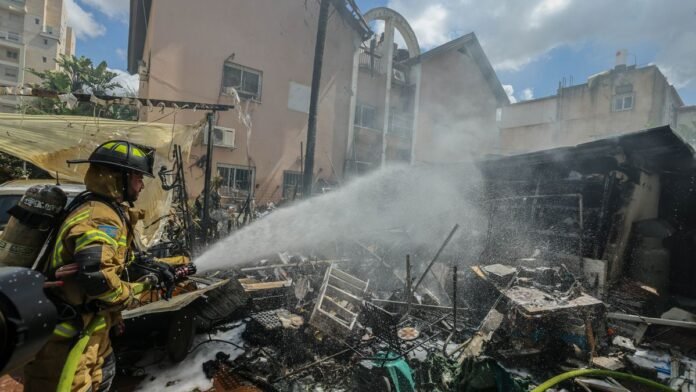
Recent hostilities have resulted in casualties in Israel, where Iranian missile strikes caused injuries to around 180 individuals, including a child, in southern regions. The attacks also led to damage in towns like Dimona and Arad, with reports of significant destruction in residential areas. The proximity of these towns to a nuclear facility raised concerns, although the International Atomic Energy Agency reported no harm to the plant near Dimona.
In response to Trump’s threats, Iran’s military pledged to target US and regional energy and desalination infrastructure. Israel’s defense forces claimed successful interception of a significant portion of the ballistic missiles fired by Iran during the ongoing conflict. They reported a high interception rate of approximately 92%, demonstrating effective defense measures against incoming threats.