
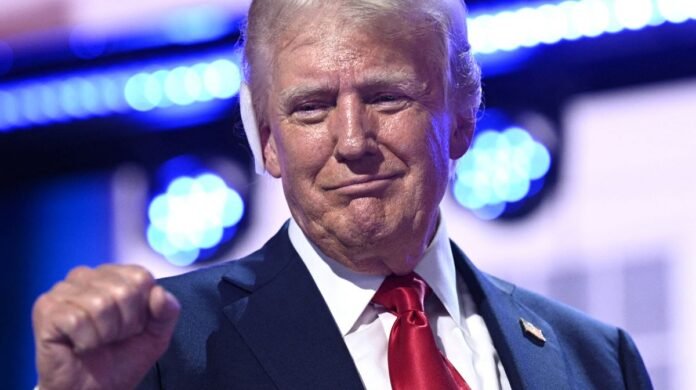

Former President Donald Trump faced criticism for his abrupt change in stance towards Iran, initially threatening the country with ‘annihilation’ before swiftly agreeing to a ceasefire deal. The 79-year-old had issued a dire ultimatum, warning that Iranian civilization would face destruction if its leader did not comply with reopening the Strait of Hormuz, raising concerns of a potential nuclear conflict. However, Trump later disclosed that Iran’s leadership had proposed a feasible plan, leading to a 14-day ceasefire agreement, despite Iran’s insistence on controlling the crucial oil route and imposing a significant fee for safe passage.
In a message posted on his Truth Social platform shortly before the deadline he had set for Iran, Trump claimed that the United States had successfully achieved its military goals and anticipated a prosperous era for the Middle East. He expressed optimism for world peace and highlighted the potential economic gains from the situation, emphasizing the opportunities for Iran to initiate reconstruction efforts.
The sudden shift in Trump’s position drew contrasting reactions, with some labeling it as another instance of his tendency to back down from bold statements, a pattern commonly referred to as the ‘Trump Always Chickens Out’ effect. Democratic lawmakers criticized Trump’s initial threats as a moral failure, with concerns raised about violating international laws by targeting civilian infrastructure. Senator Chris Murphy, a Democrat, voiced disappointment over Trump’s decision, accusing him of granting Tehran control over the strait and delivering a significant victory to Iran.
The developments unfolded amidst heightened tensions and fears of escalating conflicts, with Trump’s actions eliciting strong reactions and reflections on the implications of his decisions.