
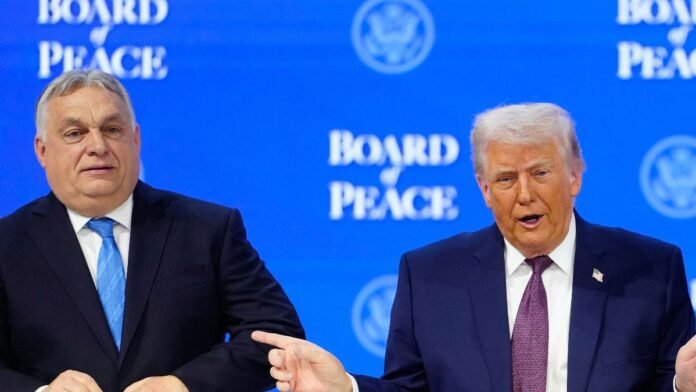

Europe has reached a critical juncture where alliances are shifting, and long-standing partnerships are beginning to unravel. The recent Hungarian election results have sent a clear message that the era of Trump’s political influence in Europe may be coming to an end.
Viktor Orbán, once hailed as a key figure in Trump’s European strategy, suffered a significant defeat in the Hungarian election. Despite Orbán’s 16-year grip on power and close ties to the Trump administration, his party faced a landslide loss to Péter Magyar’s Tisza party.
The defeat in Hungary not only reflects poorly on the Vice President dispatched by Trump to ensure Orbán’s victory but also signifies a broader rejection of the nationalist agenda that Trump has been promoting in Europe. This outcome challenges the belief that authoritarian leadership and anti-democratic practices are the way forward for the continent.
Furthermore, European nations have begun to push back against Trump’s aggressive policies and rhetoric. Countries like France, Spain, Italy, and Germany have openly criticized American actions, signaling a shift towards greater independence from the United States. The UK has also distanced itself from Trump’s initiatives, emphasizing its autonomy in decision-making.
The Hungarian election outcome serves as a stark reminder that European nations are asserting their sovereignty and choosing their path independent of external influences. The rejection of Trump’s agenda in Europe signifies a turning point where the continent is asserting its autonomy and direction.