
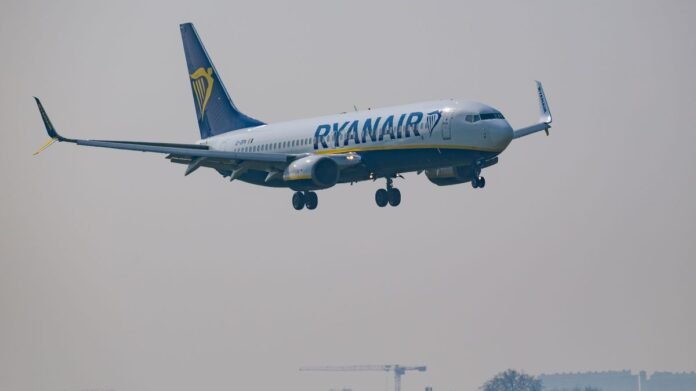

A Ryanair flight departing from London Stansted airport en route to Faro, Portugal, had to declare a mid-air emergency shortly after take-off. The incident led the flight crew to make a decision to divert to Bournemouth Airport instead of returning to London Stansted’s airspace. The emergency signal, known as Squawk 7700, was activated about 45 minutes into the flight, prompting a rapid descent.
The aircraft, visible on radar, made a sharp turn and decreased altitude as it headed towards Bournemouth Airport on the English coast. The flight landed safely in Bournemouth approximately an hour after departure, with reports suggesting a medical issue on board.
The use of the emergency code 7700 alerts air traffic control to the distress situation of the aircraft, requiring immediate attention. This code is a general emergency signal covering various emergency scenarios except for hijacking or radio failure. Ryanair has been contacted for further comments on the incident.
In a similar event last month, passengers on a Ryanair flight from Manchester Airport to Sandefjord Airport, Torp, in Norway, experienced an emergency situation. The flight had initially faced a one-hour delay before taking off, appearing to proceed normally for about 40 minutes. However, at cruising altitude over the North Sea, a Squawk 7700 code was transmitted, leading to the aircraft’s return to Manchester Airport.
The plane successfully landed at Manchester Airport and was closely monitored by air traffic control, receiving priority landing due to a reported “minor technical issue.” Passengers were accommodated on a replacement aircraft following the incident.