
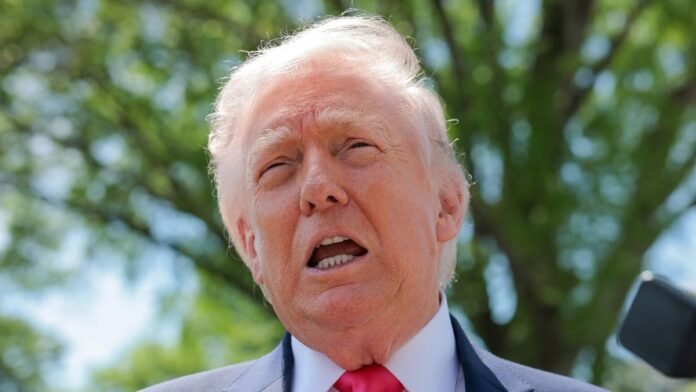

President Donald Trump has issued a stark warning to Iran about the potential for a “nuclear holocaust” if the two nations fail to reach a deal, despite his recent rhetoric promoting peace. Trump, speaking to reporters before departing for Las Vegas aboard Marine One, expressed optimism about nearing an agreement with Iran, highlighting the economic benefits and the crucial avoidance of a nuclear catastrophe that would come with such a deal.
In another development, Israel and Lebanon have reportedly agreed to a ceasefire following a period of intense conflict that resulted in over 2,100 casualties in Lebanon. Trump disclosed the start time of the 10-day ceasefire, attributing the successful negotiation to his efforts and affirming his commitment to achieving lasting peace in the region.
The potential ceasefire between Israel and Lebanon could have significant implications for the broader peace talks involving the US and Iran. Iran has emphasized the importance of a ceasefire in Lebanon as a prerequisite for any discussions with the US, indicating its stance on peace negotiations in the region.
Furthermore, Trump extended invitations to the leaders of Israel and Lebanon for direct peace talks at the White House, aiming to facilitate productive conversations between the two nations. Despite Trump’s assertion of a historical precedent for such talks, the last substantial negotiations between Israel and Lebanon were actually held in 1993.
However, Lebanese President Joseph Aoun has declined direct engagement with Israeli Prime Minister Benjamin Netanyahu, underscoring Lebanon’s stance on the matter during a conversation with US Secretary of State Marco Rubio. Aoun’s decision reflects Lebanon’s position on the necessity of a ceasefire before engaging in direct negotiations with Israel, a sentiment echoed by Washington and the Israeli government.
The ongoing conflict between Israel and Hezbollah continues to escalate, with both sides exchanging fire across the border, further complicating the prospects for peace in the region. Israel’s military actions in southern Lebanon have raised tensions, with Netanyahu advocating for the establishment of a security zone along the border, a move that has faced opposition from Lebanon.
The situation remains complex, with historical animosities and geopolitical interests shaping the dynamics of the conflict between Israel, Lebanon, and other regional actors. Efforts towards peace and ceasefire agreements are met with challenges and divergent viewpoints, underscoring the intricate nature of the ongoing tensions in the Middle East.