
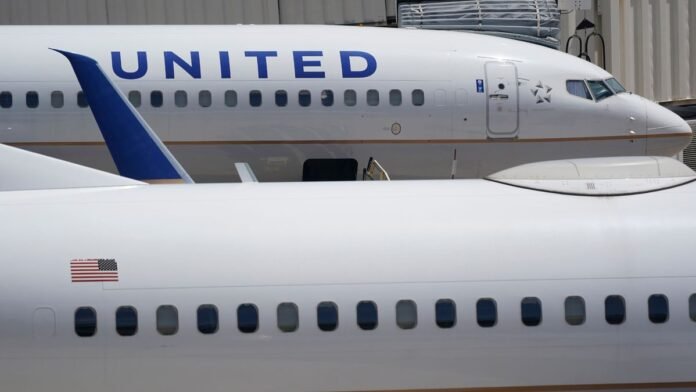

A commercial aircraft had to alter its flight path dramatically following a reported ‘bomb scare.’ United Airlines flight UAL2092, originally scheduled from Chicago to New York on April 18, was redirected to Pittsburgh early in the morning. The aircraft signaled an in-flight emergency by issuing a 7700 squawk code upon reaching cruising altitude. This code is used to indicate emergencies, often leading to the aircraft being directed to a remote area for passenger deplaning and a security check.
Flight radar data displayed the aircraft diverting from its course towards Pittsburgh airport due to the perceived threat. An alert sent by the plane via a flight tracking app mentioned a “possible bomb” as the reason for the diversion. The United Airlines Boeing 737 MAX 8 transmitted the 7700 squawk code, and additional messages shared through ACARS provided more details on the emergency diversion.
Concerns raised onboard prompted the crew to declare an emergency, leading to the aircraft’s diversion for a security sweep at Pittsburgh International Airport. Communication excerpts indicated a potential explosive threat, possibly related to a repetitive beeping sound. The crew and ground teams assessed diversion options, considering Cleveland Hopkins International Airport or Pittsburgh as landing sites. The original route was identified using ICAO airport codes for Chicago O’Hare and New York LaGuardia.
Timestamped communication revealed the exchange around 15:42 UTC (10:42 am local time in Chicago). Standard procedure in response to a “possible bomb” message involves squawking 7700 for priority handling and a swift, safe landing.