
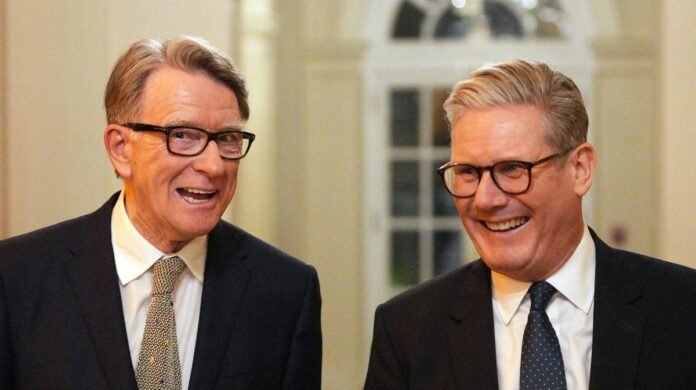

A continuous stream of damaging reports regarding Peter Mandelson’s appointment as the UK’s top diplomat in Washington remains a source of concern for Keir Starmer.
Recent disclosures about Mandelson’s association with the billionaire Jeffrey Epstein have caused turmoil within the Labour government.
The situation reached a critical point in February, prompting the Prime Minister’s team to establish a crisis management center at No10. Despite calls for resignation from Scottish Labour leader Anas Sarwar, Mr. Starmer received strong support from senior figures within the Labour Party.
Nevertheless, concerns persist over the impact of Lord Mandelson’s appointment on the Prime Minister’s credibility.
This week, the Prime Minister will address recent revelations in Parliament regarding Lord Mandelson’s security clearance, which was granted despite a failure in official vetting processes.
In response, Mr. Starmer expressed frustration with the Foreign Office, leading to the dismissal of the permanent secretary, Sir Olly Robbins. He emphasized the need for transparency and vowed to clarify the situation before MPs.
Facing pressure from opposition MPs calling for his resignation, Mr. Starmer anticipates scrutiny from his own party members.
The upcoming appearance of Sir Olly before the Foreign Affairs Committee, not representing the government as before, is expected to shed further light on the vetting controversy.
Despite challenges within the Parliamentary Labour Party, MPs are likely to rally behind the Prime Minister, acknowledging his stance on international matters like the Iran conflict.
As the May 7 elections approach, Mr. Starmer is bracing for a critical juncture in his political career, with voters in England, Scotland, and Wales set to cast their ballots.