
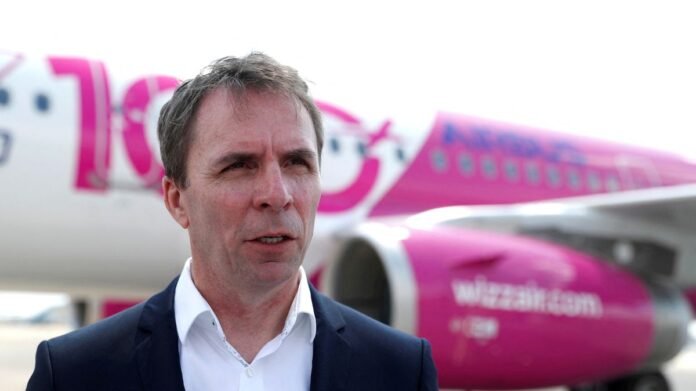

The CEO of low-cost airline Wizz Air has raised concerns about the potential collapse of European competitors by September if jet fuel prices continue to soar due to the ongoing Middle East conflict. Jozsef Varadi warned that airlines may face financial strain once the peak summer demand subsides, typically in June. He emphasized that airlines historically struggle in September and February, particularly those with weak financial reserves.
Jet fuel costs have surged by over 100% since the start of the Iran war in February. This trend was exemplified by the collapse of UK-based Ascend Airways, a company providing aircraft to various carriers such as Tui and Oman Air. Ascend Airways attributed its insolvency to the Middle East conflict and escalating fuel expenses, leading to a challenging outlook for the summer season.
The escalation in fuel prices prompted Lufthansa, a major German airline, to cancel 20,000 summer flights last week. Lufthansa’s decision aligns with a growing trend among approximately two dozen airlines reducing operations to cope with exorbitant fuel costs. The Airports Council International has also sounded the alarm, cautioning that smaller regional airports face an existential threat due to the sector’s challenges.
Despite industry upheavals, Wizz Air remains optimistic about its leisure summer schedule, planning a 17% expansion this year, primarily targeting the Balkan and Caucasus markets. Varadi expressed confidence in the airline’s strong summer bookings compared to the previous year, contrasting the struggles faced by competitors like easyJet and Tui. He urged Europe to reconsider its heavy dependence on Middle Eastern fuel sources, anticipating potential industry-wide capacity cuts in the coming months.