

An admirer of Oswald Mosley. A retired individual who disparaged Muslims as “scum.” A director of a company who appeared to rejoice in women being assaulted. These are some of the candidates for local elections from the Reform party that have been brought to light.
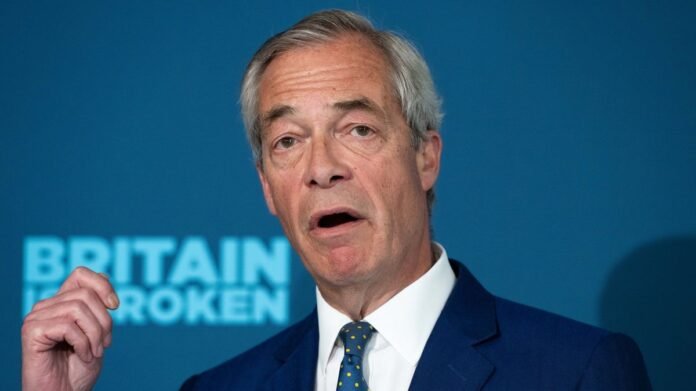
Just a few weeks ago, Nigel Farage boasted about the thorough vetting process of his party. However, Reform has faced embarrassment after several of their candidates were exposed. Despite Reform’s leader’s claims of effective vetting procedures, recent evidence suggests otherwise, as revealed by the Mirror and in collaboration with anti-racism group Hope Not Hate (HnH). As voters prepare to cast their ballots in various councils in England, as well as for the Senedd in Wales and Scotland’s Parliament, we highlight some of Reform’s controversial selections.
One notable case is Stuart Prior, a company director, running in the same county as Farage’s Parliamentary seat. Prior’s offensive tweets, including statements promoting racism and asserting white supremacy, have been uncovered. In a joint investigation with HnH, it was revealed that Prior made derogatory comments about various ethnic groups and religions. Despite denying the accusations when approached at his residence, Prior’s posts are under scrutiny by Reform.
Reform’s policy prohibits former British National Party members from joining the party. However, the discovery of George Parnell, a technology sector worker, listed on a leaked BNP document led to Reform expelling him and two others for not disclosing their past affiliations. The investigation, conducted with HnH, matched Reform candidate names with the leaked BNP list, which included both active and potential members.
Another candidate, David Prior, running in Gateshead, was confronted about his previous BNP membership, which he admitted to. Despite claiming to have distanced himself from the group upon realizing its nature, Prior was also expelled by Reform.
Furthermore, Professor Angus Dalgleish, a Reform candidate in North Cheam, Sutton, was associated with controversial statements linking the Royal Family’s health issues to Covid vaccines. Reform disavowed the claims made by another individual at their conference, emphasizing that they do not endorse such views.
Andrew Mahon, a Reform candidate supporting Oswald Mosley and Enoch Powell, was exposed for extremist views on social media. Despite facing backlash for his public statements, Mahon is being investigated by Reform for his affiliations.
Similarly, Daniel Devaney, a candidate in Bradford, received criticism for anti-Muslim remarks made online. Devaney expressed regret for his comments and denied being racist, while Reform stated they are looking into the allegations.
In Wales, Emma Clatworthy, a Reform candidate for the Senedd, faced scrutiny for promoting conspiracy theories and disparaging remarks about the monarchy. Clatworthy defended her past remarks as part of a phase of exploring various ideas online, emphasizing her commitment to serving people fairly as a candidate.
These revelations have cast a shadow over Reform’s candidate selections, prompting investigations and expulsions from the party. As the elections approach, voters are urged to consider the backgrounds and statements of the candidates they support.