
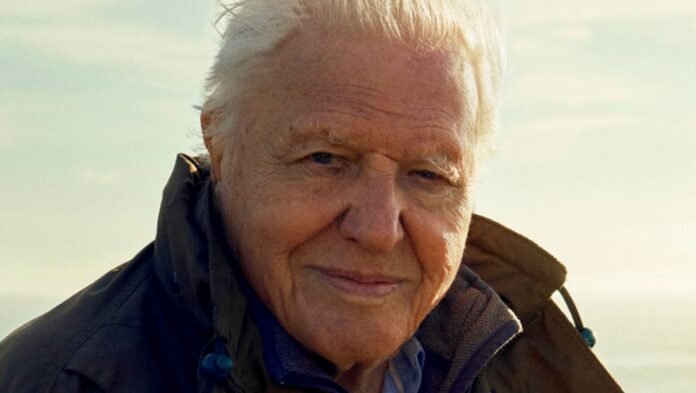

Sir David Attenborough was born in 1926 in London and developed a passion for natural history early on. He expressed gratitude for his fulfilling career that allowed him to travel the world, focusing on animals and people in his films.
Raised in a family that nurtured his curiosity for the natural world, Attenborough’s parents encouraged his interest in creatures like tropical fish, salamanders, and hedgehogs. His elder brother, Richard, was a renowned actor and director, while his younger brother, John, worked in the automotive industry and as a financial advisor.
During World War II, Attenborough’s family provided a home to two German Jewish orphaned siblings, Irene and Helga Bejach, whom he considered as sisters. This act of kindness left a lasting impact on him and his family.
At a young age, Attenborough seized opportunities to engage with wildlife, even for profit. He supplied newts for scientific experiments, showcasing his early interest in zoology. His educational journey led him to Cambridge University, where he studied geology and zoology.
Joining the BBC as a producer, Attenborough’s career took off with the groundbreaking series “Zoo Quest,” which introduced viewers to exotic animals in their habitats. His passion for wildlife documentaries led to iconic series like “Life on Earth,” which showcased the wonders of evolution to a global audience.
Throughout his illustrious career, Attenborough continued to create captivating documentaries, including the acclaimed “Blue Planet” and “Planet Earth” series. His dedication to showcasing the natural world has inspired millions and cemented his legacy as a pioneer in wildlife filmmaking.
Despite the challenges of balancing work and family life, Attenborough’s contributions to conservation and environmental awareness remain unparalleled. His commitment to educating the world about the beauty and fragility of nature continues to resonate with audiences worldwide.