
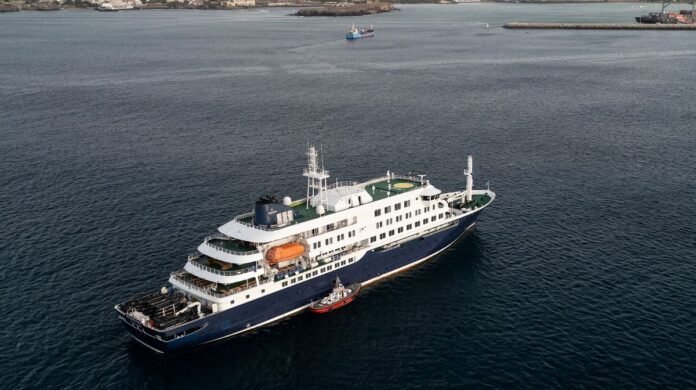

An international effort is currently in progress to locate 30 cruise passengers who disembarked on a secluded Atlantic island amid concerns about the spread of a dangerous human-to-human strain of Hantavirus. On Tristan da Cunha, the most isolated inhabited island globally, a third British citizen is now suspected to have contracted the virus after the MV Hondius exploration vessel made a stop there in mid-April, just before the outbreak was fully recognized.
The World Health Organization (WHO) has issued a warning to 12 countries, alerting them that individuals who departed the 107-meter ship may be carrying the lethal pathogen. These countries include New Zealand, Canada, Singapore, Turkey, the US, the Netherlands, Germany, Denmark, Sweden, Saint Kitts and Nevis, Switzerland, and the UK. The virus has already claimed three lives, with one victim’s body being removed during a stop at Saint Helena, the island where Napoleon Bonaparte spent his final exile years.
Authorities in Saint Helena have stated that the risk to locals is minimal, as the majority of islanders had no contact with the ship. However, one passenger who traveled from the island to Johannesburg has died, while a British man who shared the flight remains in critical condition in a South African ICU. The situation escalated on May 6 when scientists confirmed that the outbreak is the Andes strain of Hantavirus, known for its human-to-human transmission capability through close and prolonged contact.
Dr. Tedros Adhanom Ghebreyesus, WHO Director-General, emphasized the potential for additional cases and the importance of preventing further virus spread. To enhance global preparedness, 2,500 diagnostic kits have been swiftly dispatched from Argentina to laboratories in five countries.
The MV Hondius is currently en route to the Canary Islands, sparking controversy upon its arrival, with local leaders attempting to block the ship before being overruled by the Spanish government. Britons on board, including crew and passengers, will face a stringent 45-day isolation period upon returning to the UK to ensure they are free of the virus, which can remain dormant for up to 39 days.
Among those evacuated from the ship due to the outbreak are Martin Anstee, a 56-year-old retired police officer, who is in stable condition in a Dutch hospital. An individual from the Netherlands and a 65-year-old from Germany were also evacuated. Infectious disease specialist Maria van Kerkhove advised calm but highlighted the unique transmission pattern of the virus compared to Covid-19 and influenza, emphasizing the need for caution.
All individuals aboard the vessel, operated by Oceanwide Expeditions, have been instructed to wear masks, with caregivers wearing enhanced personal protective equipment (PPE) when in close proximity to suspected virus carriers.