
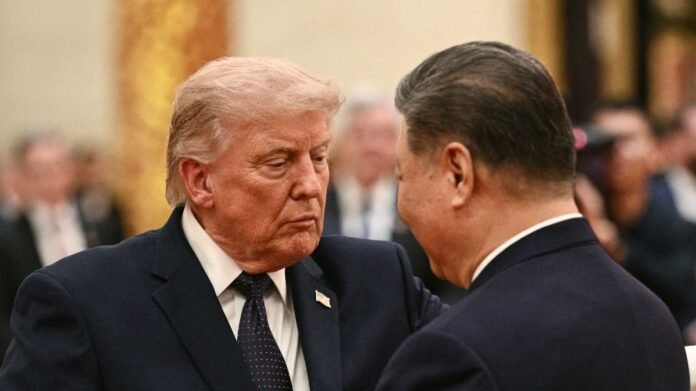

In a recent statement, former President Donald Trump revealed that he chose not to provide a direct response to Chinese President Xi Jinping’s inquiry regarding the United States’ stance on defending Taiwan in the event of an attack by China. When pressed by a reporter on the matter, Trump reiterated his refusal to disclose details, stating that only he holds the knowledge on the subject and that he refrains from discussing such sensitive topics openly.
Following a series of engagements with Chinese leader Xi Jinping, including a state banquet, official meetings, and a casual tea session, President Trump concluded his visit to China. Reports from the Chinese foreign ministry indicate that Trump and Xi engaged in substantial discussions covering various bilateral and global issues, leading to the establishment of new agreements between the two nations.
The White House confirmed the positive outcomes of the bilateral meetings, emphasizing the productive dialogue on enhancing economic collaboration, market access for American enterprises in China, and increased Chinese investments in U.S. industries. Furthermore, the leaders highlighted the importance of combatting the flow of fentanyl precursors into the United States and augmenting Chinese purchases of American agricultural goods.
Regarding Iran, Trump emphasized the alignment between the U.S. and China on the issue, expressing a shared desire for peaceful resolutions and non-proliferation of nuclear weapons. Trump’s remarks post-Beijing departure underscored the mutual stance on Iran and the imperative of keeping the Straits open for global stability.
On the contentious topic of Taiwan, President Xi cautioned Trump about the potential repercussions of mishandling the issue, highlighting the critical nature of Taiwan in the overall U.S.-China relationship. Notably, the U.S. reiterated its longstanding position of not supporting Taiwanese independence, as reaffirmed by Secretary of State Marco Rubio.
As discussions concluded, both sides acknowledged progress on various fronts, showcasing the ability to address complex issues and reach consensus, underscoring the importance of diplomatic efforts in maintaining stability and cooperation between the two nations.