
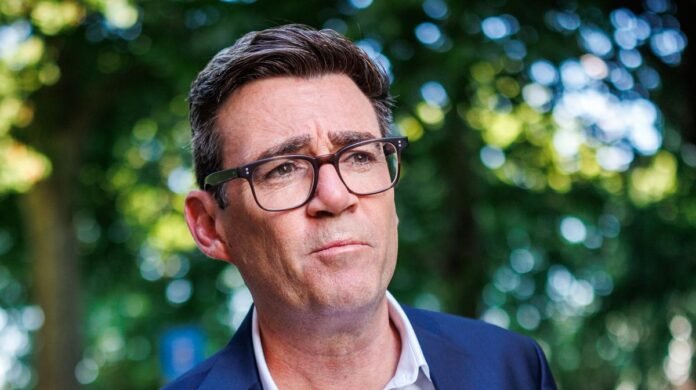

Andy Burnham has expressed regret over the initial response of the Labour Party to the Gaza conflict and indicated a notable shift in the party’s position on the Middle East.
The future Prime Minister acknowledged the distress in Gaza as a stain on our shared conscience and emphasized the need to increase pressure on the Israeli government. He denounced the attacks by Hamas on October 7 and the subsequent surge in antisemitism in the UK, including the disturbing assaults on a synagogue in Manchester.
Despite this, Burnham clarified that there is no inconsistency between a firm stance against antisemitism and holding the Israeli government accountable.
In a social media video, he admitted, “I am aware that many people believe that our party initially failed to respond appropriately to Israel’s military action in Gaza, and I apologize for that. The response has often been inadequate. We must strive for improvement.”
These remarks reference Keir Starmer’s initial reaction to the October 7 attacks, where he made controversial comments suggesting that Israel had the right to restrict essential services in Gaza. It took him nearly ten days to clarify his statements, asserting that he meant Israel had the right to self-defense, not to deny necessities to civilians.
The public outcry over Starmer’s comments lingered, leading to pressure from certain Cabinet members for the UK to acknowledge a Palestinian state last year.
Burnham highlighted positive steps taken by the government, such as recognizing Palestine, imposing sanctions on Israeli officials and violent settlers, and limiting arms licenses that could be used in Gaza.
However, he pointed out that the UK was slow in calling for a ceasefire and urged for a stronger approach. He criticized Israel’s actions post-ceasefire, including the killing of innocent Palestinians, escalating settler violence, and the expansion of illegal settlements that displace Palestinian communities.
Burnham advocated for further sanctions against those responsible for violence in Gaza and proposed considering a ban on trading goods with illegal settlements.
Expressing dismay over the destruction in Gaza and the possible commission of war crimes, Burnham stressed the importance of holding those accountable for the suffering. He emphasized the role of international courts in determining accountability rather than politicians.
In another foreign policy address, Burnham expressed his desire for closer ties with Europe to enhance defense cooperation.
He mentioned in The Times, “I aim for stronger relations with European nations, emphasizing collaboration through European-led groups like the E3, bolstering the European aspect of Nato, and fostering defense industrial cooperation without hindrances.”
Burnham also highlighted the need to build on existing UK-EU negotiations and enhance collaboration on issues like illegal migration, economic security, and societal resilience to external threats such as terrorism and AI-driven misinformation.