
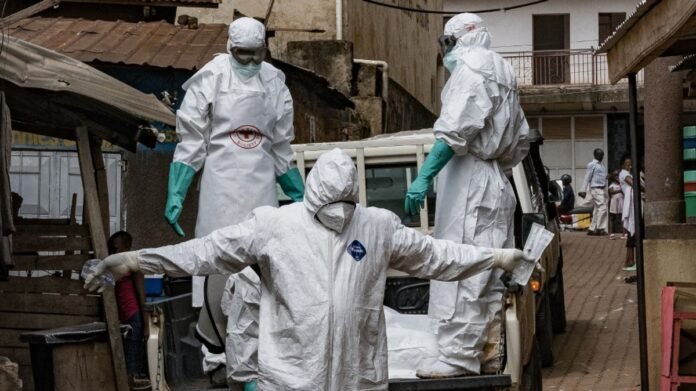

Anxiety rises as the recent Ebola outbreak crosses an ocean and reaches Brazil, sparking worries about the lack of medical assistance. The Democratic Republic of Congo is grappling with over 1,000 suspected Ebola cases, prompting Doctors Without Borders to express deep concern over the fast dissemination of the virus, particularly in the northern Ituri state bordering Uganda and South Sudan.
The death toll has climbed to 246, leading neighboring nations to seal their borders with DR Congo, despite World Health Organization’s recommendations against such actions. Brazilian health authorities are investigating two potential Ebola cases in the country, involving a 37-year-old man from DR Congo and another individual from Uganda, triggering emergency responses in Sao Paulo and Rio de Janeiro.
Doctors Without Borders issued a cautionary statement regarding the rapid escalation of the lethal virus, highlighting the unprecedented number of cases reported shortly after the outbreak was declared. The organization’s deputy director, Dr. Alan Gonzales, emphasized the disparity between the outbreak’s pace and the ongoing response efforts in the affected regions.
Gonzales emphasized the lack of clarity regarding the outbreak’s magnitude and severity, with new suspected cases emerging daily while numerous samples remain untested. The initial Ebola-related fatality in Bunia on April 24 set off a chain of events leading to the outbreak’s intensification in the Mongbwalu health zone, a densely populated mining area in Ituri.
This outbreak, identified as the 17th in DR Congo, is particularly worrisome due to the rare Bundibugyo strain for which no vaccine exists. UK researchers at Oxford University are in the process of developing a new vaccine targeting this specific strain, with potential clinical trials slated for the next few months.
Dr. Tedros Adhanom Ghebreyesus, the WHO’s head, visited the Ituri region last week, cautioning the public about the dangers of certain funeral practices that could accelerate the virus’s spread. Stressing the importance of preventive measures to avoid further losses, Dr. Tedros emphasized breaking the cycle of grief caused by the outbreak.