
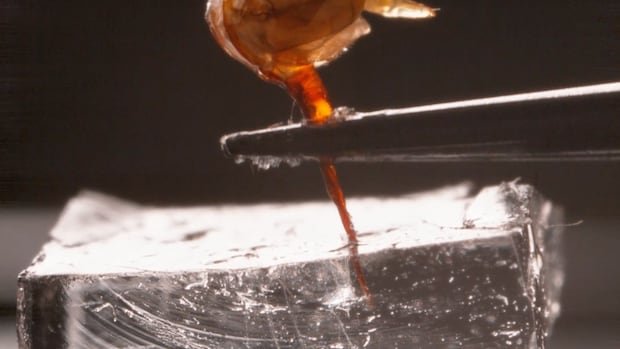

A western honey bee’s stinger is a lethal weapon designed to inject venom into flesh as a last resort, often leading to the bee’s demise. New research, recently published in the Proceedings of the National Academy of Sciences, is shedding light on the effectiveness of this defense mechanism by capturing the action with high-speed cameras.
Fiorella Ramirez Esquivel, the lead author and a postdoctoral researcher at Macquarie University in Australia, expressed the significance of being able to film the bees in action, made possible by modern camera technology.
The study utilized live honey bees, extracting their stingers and promptly euthanizing them due to the stinger’s short-lived activity once separated from the bee’s body. With the stinger remaining active for about two minutes, researchers had to work swiftly to conduct their experiments.
The research revealed a double-piston design in the bee’s stinger, where two specialized valves worked simultaneously to drive the stinger deeper into the flesh and continuously pump venom from the sac. This intricate mechanism, likened to a car engine but far more complex, was reenacted using 3D printing for better comprehension.
Juliana Rangel, an apiculture professor at Texas A&M University not involved in the study, found the videos fascinating, offering a deeper understanding beyond conventional microscopy images and diagrams.
The study also delved into the evolutionary significance of the honey bee’s defense strategy, highlighting the unique autotomy process where the bee sacrifices part of its body for the greater good of the colony’s protection.
Furthermore, the research points out that honey bee stingers release pheromones to recruit other bees during a defensive attack, enhancing the collective defense mechanism of the colony.
The study’s findings have potential implications in various fields, including medicine, due to the continuous flow of venom facilitated by the bee’s stinger design. The research also prompts intriguing questions about other honey-producing bee species and their lack of stingers, emphasizing the evolutionary adaptations within different bee populations worldwide.