
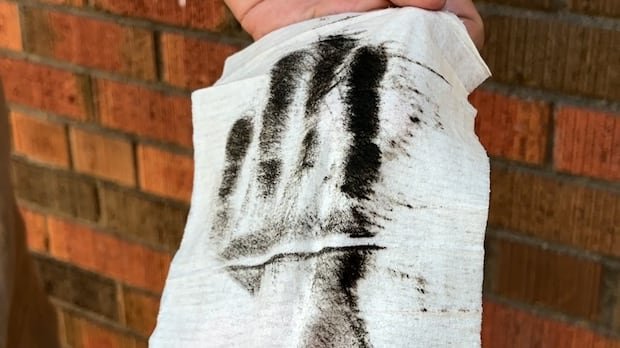

Emissions from Birla Carbon, a manufacturing company, have been identified as a significant contributor to the black soot that covered neighborhoods in Hamilton last month, according to Ontario’s Ministry of the Environment, Conservation and Parks (MECP).
Residents and local officials expressed concerns over the unusually heavy soot fall in early July, affecting areas not typically impacted by the ongoing issue of black dust in Hamilton, particularly in the eastern industrial region.
The excessive soot accumulation prompted numerous residents to urge elected leaders to address the issue, leading the ministry to initiate a formal investigation into Birla Carbon for potential violations of environmental laws.
Birla Carbon stated that they are fully cooperating with the ministry’s investigation. The company’s factory on Parkdale Avenue N. is its sole facility in Canada, specializing in the production of carbon black used in various manufacturing processes worldwide.
Hamilton Public Health is reviewing the ministry’s findings, with Dr. Bart Harvey, the city’s associate medical officer of health, stating that they will provide further information on potential health impacts identified through their assessment.
While the exact composition of the emissions from Birla Carbon in July remains undisclosed, a proposed government standard for the carbon black sector highlights the association of sulphur dioxide emissions with negative health effects, particularly on respiratory and cardiovascular systems.
Councillor Tom Jackson of Ward 6 reported an influx of complaints from residents regarding the soot, urging the company to engage with the community and advocating for substantial fines to be imposed on Birla Carbon, suggesting that any penalties be used to reimburse affected residents for cleanup costs.
The recent findings from McMaster University researchers indicated the presence of toxic chemicals consistent with coal combustion in the soot, with higher levels of pollutants observed near the industrial area in northeast Hamilton. Further investigation is needed to pinpoint specific sources of contamination and mitigate future incidents effectively.