
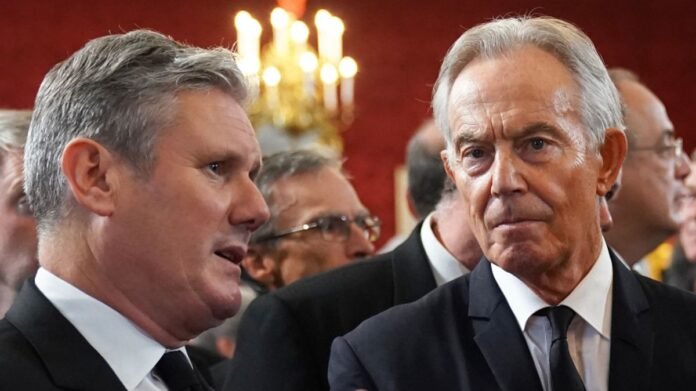

Former UK Prime Minister, Tony Blair, criticized current Labour leader Keir Starmer, stating that Starmer lacks a clear vision for the country. Blair’s scathing remarks were made in a lengthy essay where he accused Starmer of implementing policies that hindered British businesses. Blair specifically highlighted the phasing out of British oil and gas and changes to workers’ rights laws as damaging to UK business owners.
Blair emphasized that changing the party leader would be ineffective without engaging in a substantive policy debate. In response, Treasury minister Dan Tomlinson defended the government’s actions, claiming significant strides were being made to transform the country and govern effectively.
Blair’s comprehensive critique of Starmer’s government coincides with a crucial by-election in Makerfield, where Greater Manchester mayor Andy Burnham is vying for a return to power. Burnham’s potential leadership bid adds pressure on Starmer, with calls for his resignation mounting within the Labour Party.
Expressing concern over the ongoing leadership turmoil within Labour, Blair urged MPs to prioritize policy discussions over personality clashes. He stressed the importance of clearly outlining policy directions and engaging in honest debates with the public to lead the party effectively.
Moreover, Blair criticized the excessive taxation of working people and questioned the government’s focus on Net Zero targets, advocating for a reassessment of spending priorities. He cautioned that continued increases in benefits and pension commitments could hinder economic growth, emphasizing the need for a strategic approach to address the country’s challenges.
Blair warned against constant changes in leadership, highlighting the detrimental impact on the country’s credibility. He emphasized the necessity of establishing a coherent policy agenda to steer the nation forward, rather than engaging in perpetual political debates.
In response to Blair’s comments, Treasury minister Tomlinson acknowledged some points of agreement but disagreed on certain policy aspects. Tomlinson emphasized the government’s commitment to addressing current societal challenges and dismissed the notion of being trapped in past ideological battles, affirming a focus on contemporary issues.
Blair’s intervention underscores the deep-seated divisions and uncertainties within the Labour Party, as key figures like Burnham position themselves for potential leadership roles. The ongoing debate between traditional and modern Labour ideologies remains unresolved, highlighting the need for a unified and forward-looking approach to governance.