
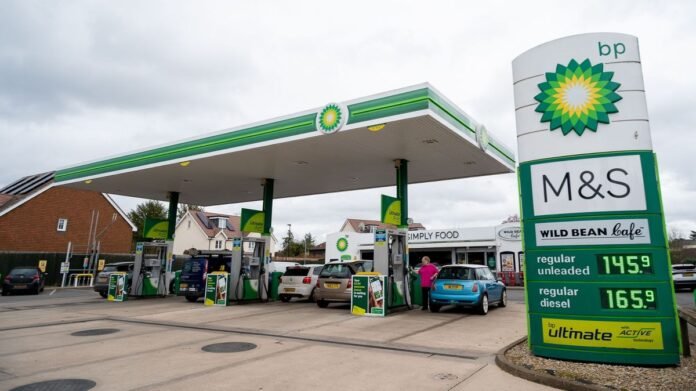

BP, a major oil company, has come under criticism for reporting a significant profit of nearly £2.4 billion while households bear the burden of the Iran conflict. This substantial amount, earned in the first quarter of the year at a rate of £365 per second, was driven by a spike in oil prices following the outbreak of the conflict in late February.
The company’s profits more than doubled compared to the same period last year, surpassing the £2 billion mark that experts had anticipated. Simon Francis from the End Fuel Poverty Coalition expressed concern over the impact of conflict-driven oil price hikes on households, emphasizing the disparity in profit distribution.
Greenpeace UK’s climate campaigner, Maja Darlington, criticized the oil industry for profiting from human suffering. Global Witness’s head of news investigations, Patrick Galey, highlighted the distressing correlation between BP’s growing profits and the repercussions of the US-Israel conflict with Iran.
BP’s new chief executive, Meg O’Neill, praised the team’s efforts to maintain safe and efficient operations amid the crisis, emphasizing collaboration with stakeholders to ensure fuel supply continuity and minimize disruptions to communities.
The surge in wholesale energy prices due to the Iran conflict is expected to benefit oil companies, but it has led to a sharp increase in fuel prices for consumers. Additionally, household energy bills are projected to rise, inflation is forecasted to climb, and global economies, including the UK, are anticipated to suffer from the fallout.
Robert Palmer, deputy director at Uplift, criticized BP’s substantial profits amidst consumer concerns over energy costs, highlighting the company’s reluctance to invest in renewable energy sources. He warned that oil and gas firms stand to gain further windfalls as the crisis persists, while urging a shift towards sustainable energy solutions to reduce reliance on fossil fuels.