
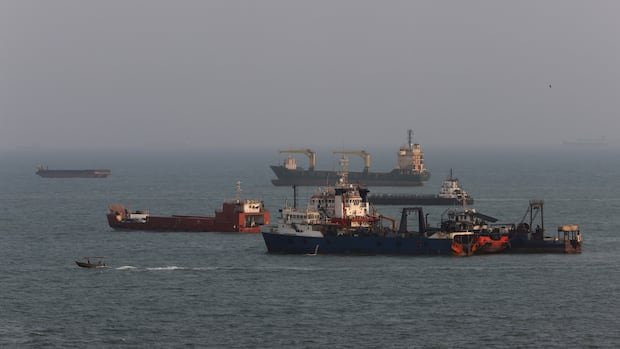

Five high-ranking Iranian officials will be subjected to sanctions for their involvement in actions in the Strait of Hormuz that undermine global peace, as stated by Canada’s foreign affairs minister. Foreign Affairs Minister Anita Anand emphasized the importance of unrestricted passage through the strait for worldwide trade and energy security. The sanctions are aimed at individuals who jeopardize these principles and pose threats to global economic and energy stability.
The sanctioned individuals, connected to the Islamic Republic of Iran, including key members of the Islamic Revolutionary Guard Corps (IRGC), have engaged in activities that have endangered a crucial international waterway, according to a press release from Global Affairs Canada. The identified officials facing sanctions are Ali Abdollahi, Lt.-Col. Ebrahim Zolfaghari, Ebrahim Azizi, Shahram Irani, and Hamid Hosseini.
Canada has now sanctioned a total of 232 individuals and 260 entities within Iran’s security, intelligence, and economic sectors. These sanctions come amidst mounting pressure to resolve conflicts, with efforts to finalize a peace agreement between the U.S., Israel, and Iran falling short. Tensions escalated following a joint U.S.-Israeli attack on Iran in February, triggering a series of conflicting statements from U.S. President Donald Trump regarding the likelihood of a peace deal.
Iran has strategically used control over the strait to influence Washington, leading to disruptions in the passage of global oil and liquefied natural gas. Trump has urged allies to safeguard the vital oil shipping route, with Canada joining other nations in calling for the immediate cessation of blockades in the strait and offering support to restore normal shipping operations.
Trump’s insistence on maintaining a blockade against Iran has strained relationships with some allies, including public criticism of Britain’s position. Despite claims of military successes against Iran, disruptions in shipping persist. Secretary of War Pete Hegseth affirmed the U.S. military’s capability to enforce a naval presence in the region indefinitely to uphold the blockade.
The ongoing conflict has led to increased pressure on Trump to end the war, as rising fuel prices impact his approval ratings ahead of the U.S. midterm elections. Additionally, the global economy faces challenges, with projections indicating a significant decline in global oil supply for the year.