
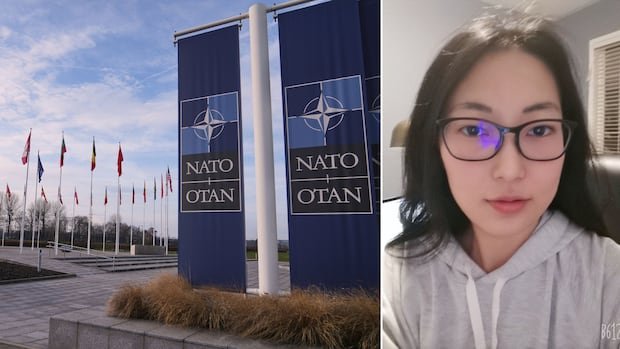

Several intelligence agencies in Western countries were caught off guard this summer when trying to determine the extent of information accessed by a suspected Canadian spy during internships at various government departments and agencies. Biwei Zhang, a Canadian intern at the NATO military headquarters in Belgium, was arrested by Belgian authorities in July on suspicion of espionage and ties to a foreign criminal entity. Despite being in pretrial detention since her arrest, her appeal for release was recently denied.
Belgian officials have been tight-lipped about Zhang’s case, not even disclosing her name. Through investigative efforts in late July, CBC News revealed her identity and traced her history of working in prominent organizations over the past decade. Zhang held positions in Statistics Canada, the Canadian Space Agency, the European Space Agency in Italy, and the World Trade Organization in Switzerland.
Although Belgian authorities have not specified the country Zhang may have spied for, reports from European media outlets, citing intelligence sources, suggest China’s involvement. The Canadian Security and Intelligence Service (CSIS) has confirmed its involvement in overseeing a comprehensive damage assessment across multiple government departments.
According to Magali Hébert, a CSIS spokesperson, standard protocol involves conducting reviews to address potential ramifications of security incidents. The focus is on identifying the scope of access Zhang may have had and any potential connections to a broader network. As investigations continue, intelligence communities are eager to understand the level of damage she may have caused and whether she had collaborators.
The aftermath of Zhang’s arrest has spurred discussions on security clearance processes in Canada. While public attention centers on how she bypassed security measures, intelligence agencies are more interested in the nature of information she may have acquired and whether she had external support. European intelligence services are also conducting thorough investigations into Zhang’s alleged activities to understand the extent of potential security breaches.
The European Space Agency and the World Trade Organization have emphasized the importance of proper security screening, leaving national authorities responsible for deeper vetting processes. As inquiries unfold, experts are focusing on reconstructing Zhang’s purported activities in various agencies, relying on stored security data and surveillance footage for insights.
The espionage allegations against Zhang have raised concerns about potential ties to criminal organizations and foreign intelligence services. The evolving narrative underscores the intricate web of espionage and the diplomatic implications surrounding such cases. As the investigation continues, authorities are meticulously analyzing the data Zhang had access to and evaluating its strategic value to foreign entities.
In light of these developments, the case of Biwei Zhang serves as a cautionary tale of the complexities and risks associated with espionage activities, prompting a reevaluation of security protocols and vetting procedures in sensitive government positions.