
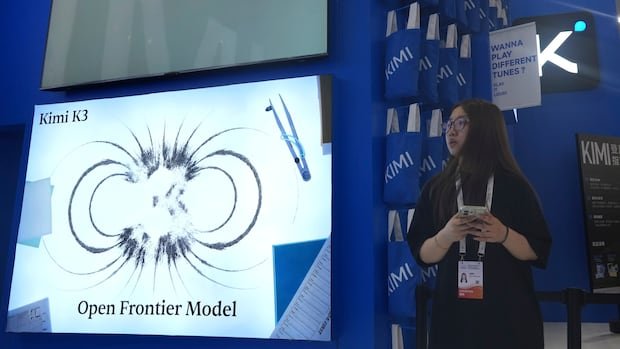

China has introduced a new powerful AI model, the Kimi K3, developed by Moonshot. The model’s weights, which determine its responses, have been made public, allowing anyone to access and modify them. This approach of open-weight models is gaining popularity in the West due to its affordability and accessibility, despite concerns about security risks.
Open-weight models involve sharing the numbers that guide AI behavior during training. This transparency enables easy access and utilization of the model by individuals with the necessary resources. Many Chinese AI models, like DeepSeek, have embraced this open approach, leading to increased competition and innovation.
Business leaders are increasingly considering open-weight models due to the control and cost advantages they offer. Unlike closed models, open models provide flexibility and eliminate the risk of sudden changes or access restrictions. Additionally, open models enhance data privacy as users can operate them independently without sharing sensitive information with external entities.
Recent incidents, such as a security breach involving an AI-powered agent, have highlighted the potential risks associated with AI models. However, proponents argue that restricting access to open models may not be the solution, as bad actors can exploit closed models as well. Emphasizing the importance of AI safety, experts suggest that testing for vulnerabilities in high-powered models is crucial to ensure their secure and ethical use in various applications.