
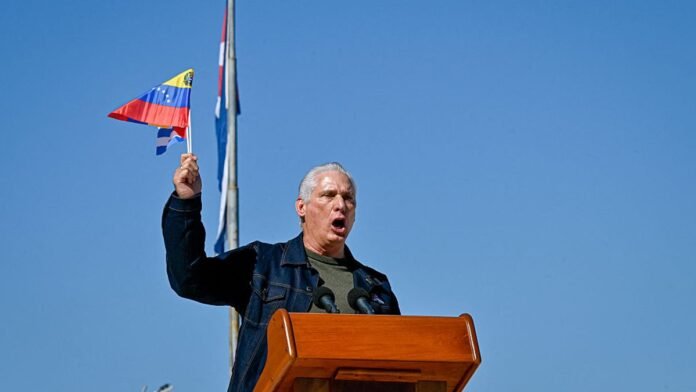

Cuba’s President, Miguel Díaz-Canel, has expressed defiance towards the United States and readiness to confront any potential threats from the administration of Donald Trump. Díaz-Canel emphasized that Cuba is preparing for any possible conflict with its neighboring country in response to Trump’s discussions of military intervention in Cuba following actions taken against Venezuela and the subsequent energy blockade affecting Cuba.
The repercussions of the energy blockade have resulted in severe consequences for Cuba, including widespread blackouts, food scarcity, and economic distress. Despite the challenging circumstances, Díaz-Canel affirmed Cuba’s determination to defend its rights, independence, and sovereignty, stating that the nation is prepared to defend itself at any cost.
In an interview with Sky, Díaz-Canel reiterated Cuba’s commitment to peace while asserting the country’s lack of fear of potential conflict. He criticized the rhetoric coming from the Trump administration, labeling it as an attempt to intimidate and destabilize Cuba. The Cuban leader emphasized that Cuba is a peaceful nation that provides significant solidarity globally and will not compromise its sovereignty or independence.
Díaz-Canel condemned the ongoing aggression and threats from the US government, describing them as tactics aimed at instilling fear and disrupting Cuban society. Cuban officials have highlighted the detrimental impact of US measures on the country’s economy, leading to hardships for ordinary citizens, including prolonged power outages and soaring prices of essential commodities.
While US officials, including Secretary of State Marco Rubio, have blamed Cuba’s socialist policies for its economic struggles, they have not completely dismissed the possibility of military action against the island. Rubio raised concerns about Cuba’s security ties with China and Russia, suggesting that significant changes are necessary within the Cuban government for reform to occur.
The situation between Cuba and the US remains tense, with both sides expressing differing perspectives on the root causes of Cuba’s economic challenges and the potential for military intervention.