

Desperate Iranian authorities have reportedly moved substantial funds abroad in anticipation of a potential regime collapse, despite the current suppression of widespread protests. The cash transfers to banks in Dubai and other locations signal concerns over a potential banking system collapse and the imminent downfall of Tehran’s oppressive government.
One notable individual involved in this financial maneuver is Mojtaba Khamenei, the son of the Ayatollah, who allegedly transferred around £250 million to a Dubai-based bank as a precautionary measure. These revelations come from a recent report by the US-based Critical Threats Organisation, which indicates that while the protests have been quelled for now, the sustained deployment of troops and police to control demonstrators, resulting in thousands of deaths and widespread arrests, is unsustainable.
The report suggests that the intense security measures implemented by the regime, including brutality towards protesters and mass incarcerations, cannot be maintained indefinitely. There are alarming reports of human rights abuses, with allegations of hospitals being raided, protesters deliberately targeted and harmed, and an overall atmosphere of government aggression against its own citizens.
Furthermore, there are conflicting estimates of the death toll in Iran, with figures ranging from 2,500 to potentially exceeding 20,000, highlighting the severity of the situation. Despite the current lull in protests, the report warns that the regime’s heavy-handed approach may lead to a resurgence of demonstrations once the security forces become overburdened.
Moreover, the report underscores the regime’s lack of confidence in Iran’s banking system as Iranian leaders reportedly transfer their US currency reserves overseas. Notably, Mojtaba Khamenei moved a substantial sum to Dubai, indicating a lack of faith in the regime’s stability. As tensions persist, there are concerns that the demonstrations could reignite as security forces face exhaustion.
The regime’s narrative has shifted to portray the protests as acts of terrorism, with authorities framing themselves as victims facing extremist elements akin to ISIS. Additionally, there are speculations that a potential US attack on Iran was postponed due to readiness concerns from Israel, fearing a retaliatory strike from Iran and Lebanese Hezbollah. The escalating tensions raise fears of a broader regional conflict, with Hezbollah possibly hesitating to support Iran in actions against Israel or the US to avoid a full-scale war.
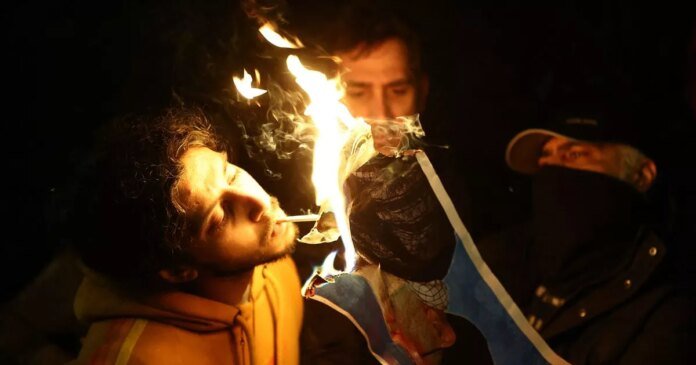
The ongoing protests, characterized by violence and chaos across Iran for over two weeks, reflect the regime’s struggle to maintain control amidst escalating dissent. The influx of additional police and strained security resources underscore the challenges faced by authorities in quelling the unrest.