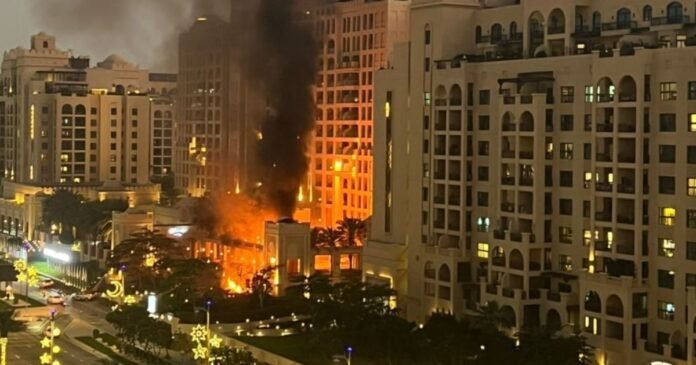

Saturdays in Dubai are typically known for leisurely activities like enjoying the sun, shopping, and indulging in brunches. However, the tranquility of the city was shattered as drones targeted key landmarks, turning the bustling metropolis into a zone of fear and chaos.
Unlike conventional military targets, the attacks seemed to focus on popular social hubs frequented by everyday people. The upscale Fairmont The Palm hotel on the iconic Palm island was struck, resulting in injuries to four individuals. Additionally, Dubai airport, Jebel Ali Port, and even the renowned Burj Al Arab faced drone-related incidents, causing alarm and disruption across the city.
Dubai, renowned for its appeal to expatriates seeking lucrative opportunities and a luxurious lifestyle, has been a magnet for professionals from various fields. With tax-free earnings reaching up to £6,500 per month, individuals like teachers, recruiters, PR specialists, project managers, and pharmaceutical employees relish the opulent amenities the city offers, from high-end malls to glamorous marinas.
Despite its allure, Dubai is also known for its stringent regulations, particularly regarding alcohol consumption and public behavior. The city’s safety measures are deemed exemplary, with strict adherence to laws ensuring order and security. Consequently, the unexpected drone attacks left residents and visitors in disbelief as missiles pierced the sky, disrupting the serene atmosphere.
Eyewitnesses, including British influencer Will Bailey, shared harrowing accounts of the attacks, with one tourist recalling the moment when a bomb struck while they were leisurely sipping cocktails at The Palm. The sudden shift from relaxation to panic was palpable, with residents recounting scenes of uncertainty and fear as the night unfolded amidst missile interceptions and loud explosions.
As the city grappled with the unfolding crisis, residents mobilized to secure essentials in a manner reminiscent of Covid-19 lockdown scenarios. Flight operations were halted, schools closed, and a sense of unease pervaded the atmosphere as the city remained on high alert.
The attacks were believed to be Iran’s response to a prior assault by the US and Israel, resulting in the death of Ayatollah Ali Khamenei. Iran’s retaliatory strikes targeted regions with US military presence, including neighboring countries like Kuwait, Bahrain, Qatar, and the UAE. Despite not hosting an official US military base, Jebel Ali Port serves as a strategic entry point for US naval operations in the region, underscoring Dubai’s significance in the geopolitical landscape.